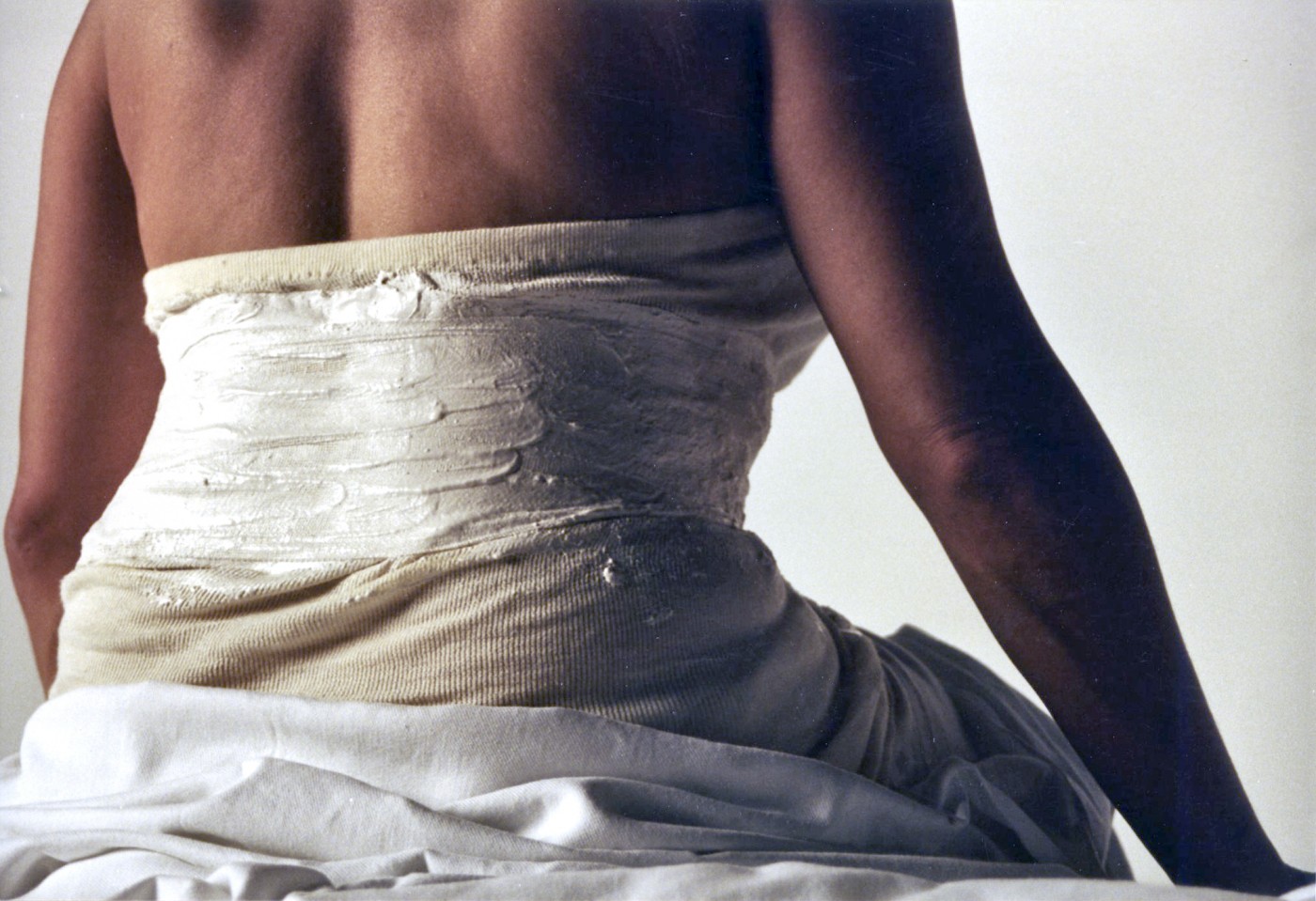
Bedding Out

Created and performed by Liz Crow

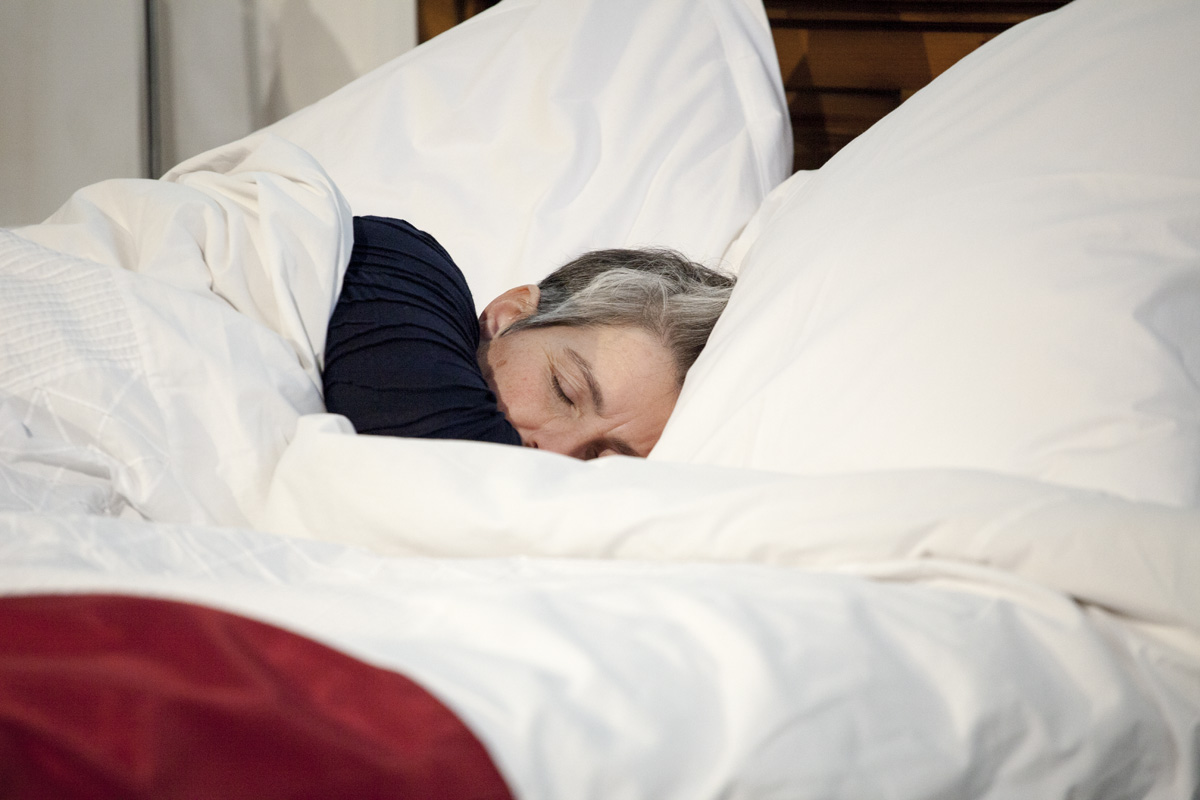
A 48-hour around-the-clock live performance
Part of the People Like You exhibition
Salisbury Arts Centre & via social media
10 – 12 April 2013, starting 2.00pm

Bedding Out: created and performed by Liz Crow

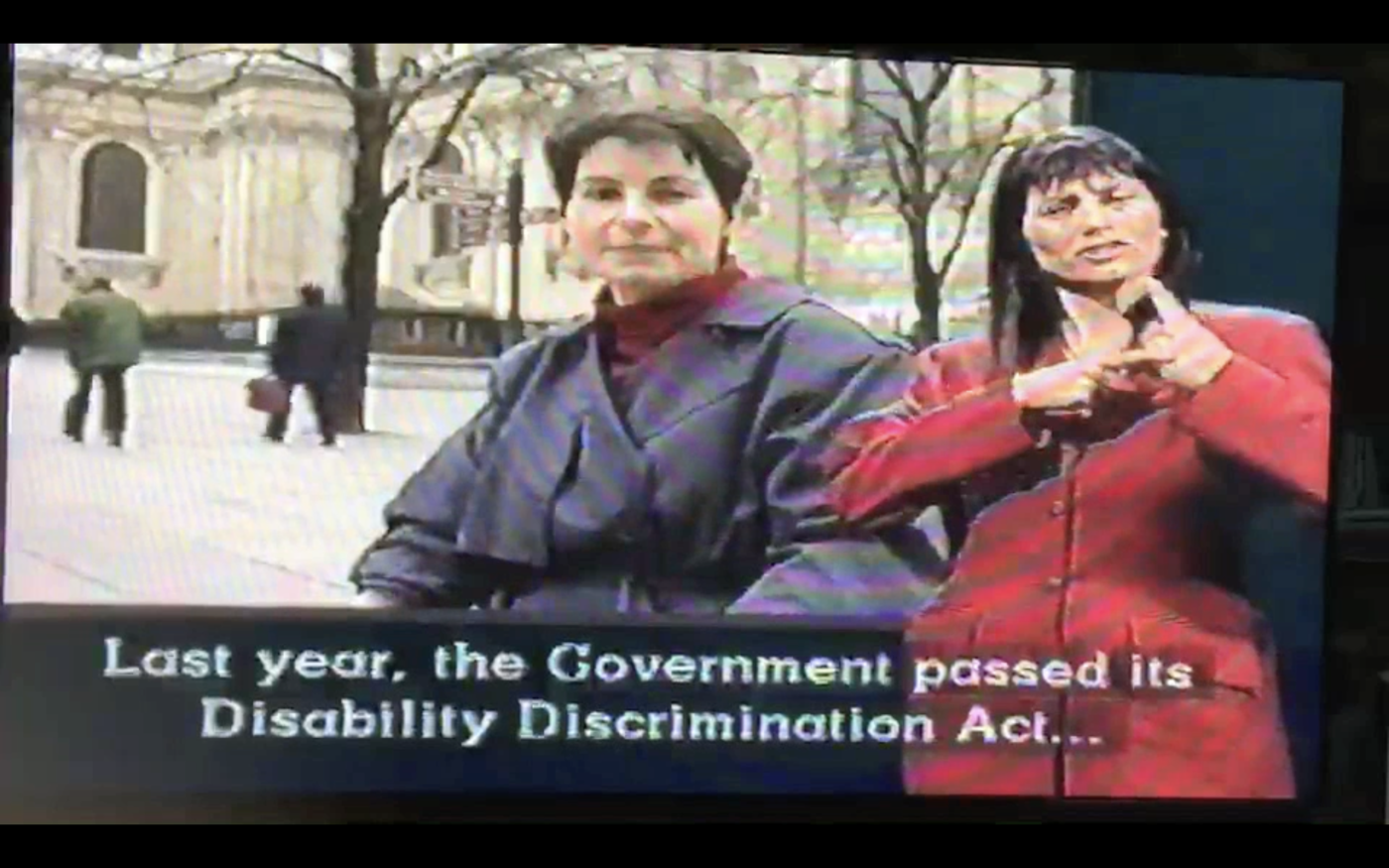
There are five videos of Bedside Conversations. A link to a downloadable transcript is located next to each video.

48-hour livestream watched by at least 8500 people in over 50 countries

Transcription

Bedside Conversation 1 of 5 with Liz Crow as part of the Bedding Out performance

Wednesday 10 April 2013 2.30pm with panel members and audience from a disability arts symposium held at Salisbury Arts Centre


Liz:              Around the bed, I have members of the panel for that symposium. So welcome. Thank you.

What I’m going to do is first of all introduce Bedding Out and talk a little bit why I’ve come to be here making this piece of work. Then I’ll leave open it up to members of the panel so that we can have a bedside conversation. Then I’ll open it up to participants from the floor, because we have about 50 people beyond the stage here today as part of the symposium.

So first to give some of the background.

[Audio begins here]

Bedding Out has really come out of my dilemma that I face in that I have lived a life of two very starkly separate parts for many, many years.

There is public self that goes out amongst people and tries to be energetic and happening and change the world and tries to meet with social approval. And then the people who see me behave in that way think that that represents me.

But then there is the private self as well. And that’s a part of me that spends most of my time at home, a lot of my time lying down, and quite a bit of my time in my bed. And nobody sees that.

And I have deliberately concealed that because I learned very early on that that way of being doesn’t win friends and it doesn’t accolades. And it certainly doesn’t win social approval. So I’ve concealed it very carefully.

But then events beyond me started to change. A new government came in and there has been a complete restructuring and on-going restructuring of the benefits system. Suddenly a system that has kind of worked for me, given me the compromises for 30 years, doesn’t work anymore. Because while I project my public self, it seems a sign that I don’t need any other support. And what I’m required instead to do is to hide that public self as though it doesn’t exist at all and parade my private self that I have concealed so carefully. And it’s like a trade; if I parade that private self, I have a possibility of getting the support that I need.

Alongside those changes to benefits, there’s also been a shift in the kind of reporting about disability. What we’ve found is an increase in reporting based on what is visible about us. So there is an idea of what it is to be disabled. And if we stray from that, visibly and in public, we are seen as being a contradiction of ourselves. Indeed, in the press, we’re seen as being fraudulent.

This is proving to have incredibly dangerous consequences. So there are statistics that say that at least 32 people every week are dying going through this new benefits assessment process having been found fit for work. Those figures are disputed. People are currently researching them and believe that they are actually higher than 32 people a week.

So what was a personal dilemma has gone into something far of a knife edge. It’s not just about me trying to work out how I live my life and integrate two parts. It’s now life and death.

So in this work what I wanted to do was make visible a community first of all that is utterly hidden from view. This kind of life doesn’t appear in public at all. But I wanted to go further than that. What I want to do is take this story and this life into the wider world so that people can understand that what is seen as an obvious contradiction, almost fraud, is actually simply complexity of real life.

So I wanted to try and get that across through this performance. And also a sense of the very, very real dangers that exist if we cannot create existence and making judgements on people without taking into account the complexities of a life like ours.

I’m wondering whether that strikes a chord with everybody around the bed.


Jo:               Certainly when I heard about the piece, I could really relate to Liz and just, “Oh, my God! Someone has broken that barrier of silence around that.”

I work with a colleague quite a lot who has fluctuating energy. I have reduced her tears, unmeaningly, unwittingly, simply by constantly making, or constantly pushing, for her to match the way in which I work and not taken into account some of her needs. Simply because they’re so unspoken. It takes such bravery to – and I ‘bravery’, I know, is a really dodgy word to use in disability circles. But this is, I think, the truest kind of thing of that. Because we are so scared of admitting our flaws. Or what we perceive other people will perceive as our flaws. They’re not. They’re just innate parts of our humanness.

I went and sat with my friend and said, “Hey, have you heard about piece? Have you heard about this piece?” And we both just had a really strong visceral response. We were in floods of tears. I was apologising. I was saying, “I didn’t…” This helped me understand what that felt like for her. I’ve really been privileged to actually be able to witness it in the flesh, as it were.

(Laughter)


Liz:              I’m interested that you used the word ‘brave’. And I’m going to take a punt and use the word ‘tragedy’. Which again is a word that most disabled people would use with great caution. But I think one of the real tragedies about keeping this way of living, this complexity, out of sight is that I realised, talking to people I’ve known for 10 years that many of them don’t even know that I’m ill. And that means that our friendship, our relationship, can never develop as deeply as they might do because I’m not trusting them.

But equally, they have no possibility of doing what’s right by me. Because they don’t know me.

So it ripples out. Whether it’s the structures or the systems that we’re trying to fit into. But it comes right back as well to the most intimate –

[18” break in audio]


Hassan:   – reveal to the world something which is private and was private for a reason. That would be something particular to you.

Now, having kind of seeded that and made this stage and gone public with it, do you think it might be a bit of a double-edged sword. I don’t know. Because you never know how something’s going to be received. “But of course. If only Liz had told us that. If only disabled people were not so coy about it when it’s a problem. If you display it, then we can all understand it.” Do you think maybe, I don’t know, it could be received in some quarters as a dovetailing into their argument. Which is, “If only we can list it, measure it, see it, then we can judge it and then what have we got to be worried about?”


Liz:              Yes. I mean, absolutely. I think that’s a really fair point. I think the greatest risk I see in doing this is that some people will look at my life and go, “I told you it was tragic. I told you your life worth living.” And it’s so much more. It’s back to complexity. There’s so much more going on in my life than just being ill puts across. But the being ill and the need to retreat is part of that big picture.

Because there’s a really sound reason that we are not honest about our lives. That talking to disabled people in the run up to this, many people have got similar bed life who instantly recognise it. But I found that amongst a much wider group of disabled people, there’s also instant recognition because it is just so commonplace that in public we edit how we present ourselves.

We edit how much we smile at people. We edit how much we catch people’s eye. We edit how we try to please people. How we massage the social situations that are so complicated; made complicated by discrimination and unease and so on. So it’s an immensely difficult navigation.

Through this people I want to resolve that for myself or for disabled people. Also what want to do is to present a kind of counter story. Particularly to the stories of things like fraud. But that kind of collective picture of what it is to be disabled that just doesn’t fit anything that I’ve experienced in the years I’ve lived as a disabled person.

So it’s really about just trying to start the conversation. And if it gives permission to some disabled people to be able to integrate those sides of themselves, that’s fantastic. But I also realise that it’s too dangerous for many of us. Or too dangerous in some situations. Or a place that we just can’t go. Because the costs are pretty too great.


Sue:            I think, for me, I’m relating it to what Hassan has mentioned about standpoint theory as well. About the difference between, if you’re in the centre, you don’t need to reconsider. Because you have the power.

But for me, it’s working on many levels. That you have an alternative narrative and through your decision to open up something that’s intensely private, you’re creating, laying a path, or creating a narrative for other people, a) to identify with, so that they can start, through your process of public integration, for me. Because obviously I very much recognise the experience you’re talking about. And I understand these costs. Intimately understand those costs and I’ve navigated them myself personally, as have many people I know.

But through that process of making it a very public process of integrating and expressing those complexities, I feel that not only are you creating a pathway for other people to begin that process of integration and create a public debate, you’re also creating a pathway for the people who haven’t yet had to negotiate those situations. Because it reminds me that one of the things about disability as Paddy Masefield said, it’s that anyone could, anyone of us, could experience it at any point in our life. And most of us only experience it through the aging process.

So it feels, the personal and the universal, for me are sitting powerfully alongside each other. And for those people who feel it isn’t relevant to them, their lives, I think you are perhaps, if it doesn’t feel relevant to their lives now, you are perhaps placing a little seed there that people will then have an empowering into the future.


Liz:              Thank you.

I hope so. I hope it’s starting to pave the way so that other people don’t have to make the bumpy journey that a lot of people here will be making.

I think it’s also about trying to find ways to counter the narrative that’s going on in the press at the moment about how we are all scroungers and workshy and so on.

It’s such a powerful narrative. I have been looking at the fraud rates recently. Some of the early headlines actually put fraud rates at 100 times more than the figures given out by the Department of Work and Pensions. And people are buying those statistics that are against us. Hate crime has doubled in the last three years. And it is being linked very closely both to certain government briefings and also press coverage. So getting this story out is absolutely critical.

And I suppose the people I most want to reach for it are the good and the kind and the compassionate people that we all know, but who have been misled by those lies. Or feel that they can’t speak out. Or feel that it isn’t really anything to do with them yet.

For me, it’s that question of how do we take these kind of conversations to them?

Can each of us go, literally, to somebody we know and have that conversation? Just try and right the stories that are told about us, the lies that are told about us, with some stories based on truth?


Marc:        I was struck by the 32-deaths statement. But not totally surprised.

Two things spring to mind. The situation for people with learning disabilities. The impact on their lack of day-care provision. They’re cutting services. Nearly all moderately learning-disabled people in Sussex for example have lost any day-centre service whatsoever. They’re a sort of voiceless group of people that not offered the support or the capacity to articulate, make clear, their situation. I think that’s something I’m very aware of.

And also about the knock-on cruelty that’s happening in our society at the moment for people with mental-health issues. In those snap-shot moments, you might be assessing people, people that were functioning in a certain role. But the impact on people to end up with far worse positions in a way and the costs will be far greater for society.


Liz:              Yes. I think to navigate a system like this, you almost need to not need the system. (Laughter) You need to be well enough, educated enough, articulate enough, well-resourced enough to be able to fight your corner. Without those resources in yourself, or incredibly good support from other people, the people who need that support most of all are those most likely to fall through the gaps.

And it is an incredibly cruel process.

I went through the Employment Support Allowance assessment last year. And was placed in the wrong group. I was placed in the work-related activity group, which for me endangers my health. So it became absolutely critical that I fight and win to get in the support group.

But that meant waiting nine months for my tribunal date to come through.

And I realised the night before my tribunal that in that year 240,000 other people had gone through that same process, which was terrifying actually. I found myself having to go through this whole legal process of going in front of a judge to argue for my existence.

And on the surface the idea of assessing people and having this right of appeal sounds so reasonable. And we need a process of assessment and a process of appeal. But they have to become humane. And they can only become humane by taking account of how our lives and bodies really are. That is not happening at all at the moment.

The other thing is that the cuts that are happening centrally, and having a huge impact on disabled, are of course exaggerated even further by the cuts that are happening on the local level.

So where calculations are made about the impact on disabled people, they’re often not taking into account the local services that have changed. It is becoming increasingly difficult even to get legal assistance to go to a tribunal now.

So in fact that legal right to challenge the decision is becoming more and more precarious. Local services are being cut so people who are already fairly isolated are becoming more isolated. Which again, ultimately will have an impact on the numbers of people who need to apply for support anyway.

So in the end if all you do is come at it from the economic angle, it doesn’t make any sense. All these measures combined will now, or in the future, cost more money.


Jo:               There was an interesting thing. I know a theatre company of learning disabled people where four people this year were told they no longer have learning disabilities. Which when you’ve been statemented at school, you’ve been through special education and you’ve been discriminated against all your life, you’ve found support, you’ve found a degree of community, a degree of comradeship. And then you’re told you’re not in that group anymore.

The impact on the individuals is absolutely profound. A complete lack of identity. A loss of identity. And support and networks.

It amuses me in a really kind of cruel way that we can play with these labels. You know, we were talking about labels earlier and the damage that labels do. But also taking away the label with no support, no preparation, nothing like that, is just as damaging, if actually that label is the only thing you’ve got to hold on to.

I think ‘inhumane’ is a really strong word. But I do think that’s an inhumane thing to do to somebody; to take away something that you’ve had.

And what does mean? What does it mean to have a learning disability? What does it mean to suddenly not have a learning disability?

People hadn’t become somebody different. You may learn new skills. You may be able to do new things. But this is just simply a goalpost shifting. And it damages people. It really, really, really damages people.


Liz:              I think those identities, what is happening now reveals how fragile they are. I think the thing that struck me, certainly the deepest unfairness for me, personally last year, was that I felt over 30 odd years, I had built up a fragile sense of security. I was managing my life well. But it was always precarious. And these changes have taken away those grains of security that I had.

So that I went to tribunal, and I did win, and I came out and I had an hour of being elated and then I realised it had just pressed the pause button until the next time I will be required to be assessed. Which in some cases, with some people, is two or three weeks later after they’ve just won a tribunal.

Where once I kind of knew what my circumstances would be in a week or a month or a year, barring changes in health, that rug has been pulled from under me. And when we are going through that system of assessment, it really does become life. It is a full-time job to manage that system, that assessment, effectively and with a good outcome.

So there is a fundamental contradiction isn’t there, isn’t it? Because of course if you are too ill to work, then how can you ever win through that system.

My own daughter was listening to me blathering about it one day and she just said to me, “You know what? It’s like witches.” If you survive this process, it’s taken as an indication that you never needed the help anyway.

I mean, that’s an extraordinary indictment on a system that claims to be there to support a community.


Hassan:   When you were talking about the assessment process, it triggered off something. A kind of Kafkaesque process. It triggered off something for me around my work supporting people making claims as asylum seekers. I think maybe some of these processes which you’re describing, and you’re trying to open out for people, have been honed in areas of life beforehand.

Because if I think if you’re an asylum seeker, first off, you were a person somewhere, located somewhere, who had a full identity. Suddenly you become an asylum seeker. So you are stripped of humanity and you become a supplicant on the nation, you know, for a nation to take you in. Then you are involved in this tortuous, demeaning, draining, frustrating, contradictory process, by which you have to prove that you have been persecuted.

So, for example, you have to prove that you’ve been raped in another country. Or you have to prove that your parents have been killed in front of you. Or you have to prove this, that and the other.

And the way that these tribunals normally go is that in the first instance, you’re always refused asylum. Every immigration lawyer knows this. In the first instance, you’re always refused. Then you have to appeal. Because they know, that way, they put you on a defensive to begin with. Then you have to appeal, so you have to find something to appeal.

You are caught in this Kafkaesque situation. And I think of individuals who have been through that asylum process, it is an extraordinarily inhumane process.

But of course, that’s not an accident. It’s designed to be.

And that’s what you were talking about. That’s the kind of parallel that it sparked for me in terms of my experience.


Liz:              You k now, the parallels are huge, aren’t they and I’m really glad you’ve raised this.

I think, within the benefits’ restructuring and the cuts that have that been happening, there have been so many different groups fighting their own corner. Absolutely through necessity.

But actually, if you start to look beneath what’s happening with specific benefits, with specific groups, the kind of values that are propelling it are really, really similar. And there is a narrative through what you’ve just told and through all the different groups fighting what’s happening at the moment about how some human beings are more equal than others; some people are of less value.

With all that we’re doing this area, we need to start tackling those assumptions and those beliefs and have permitted them to be built into systems that are supposed to represent us.

One of the ways that I think we need to do that is beginning to happen. There’s beginning to be a groundswell of those groups starting to come together and fight it in a much more united way.

So things are beginning to happen with the People’s Assembly, which has just been launched, which will meet in June. And there’s a research document come out from a group called Compass, which gives an overview of what’s happening and looks at the deeper issues that are behind it.

If we still splinter as separate groups, there is no possibility of us changing the course that this is on. But actually, if you look at how many of us are being affected by this, directly and indirectly, we are a vast majority. Potentially, we’re actually very powerful and could turn the tide.

So, I think what we need to do is just open it up to the floor and see if anybody has got any comments or questions.


Trish:         Can I just do a quick housekeeping thing here. Because we’re live streaming this event, we need to – Hassan has kindly agreed to repeat the questions so that it can actually be picked up by the live stream. So if we can keep your comments and questions quite succinct, that would be very helpful indeed.

Also very quickly, you have permission to take photographs.

Who has got questions or comments?


Audience:             Hi, Liz.


Liz:              Hi there.


Audience:             I’m really excited. No, not excited. I’m really just happy that you’re doing this performance due to the fact that I have loads of people that say to me, “You don’t look disabled.” And I feel that I don’t want to show them me on a bad day. Because if I do, they’ll start thinking that I’m weak, I suppose. If you know, me, I don’t come across as weak.

(Laughter)

So I’m really, really glad that you’re giving people the confidence to show the other side?

Because I know I find it very, very difficult to do it. I don’t tell people when I’m ill; I stay home on my own.

So, yeah. Thank you very much. I think you’re really brave in doing it. (Laughter)


Liz:              I think in the run up to this piece, I started to try answering that question that we all ask, or are asked, in a different way.

You know, when people say, “Oh, hi. How are you?” And you’re meant to go, “Fine.”

(Laughter)

I started trying out, “Not so great.” And invariably people would come back and say, “Oh, I know what you mean. I’ve had a terrible cold recently.”

And that’s when I realised that people I thought I knew well didn’t know me. And it keeps coming back to that thing. It is. It is so complicated trying to reveal those parts of yourself that are not strong and in control and do it in a way that makes us still feel ourselves at the end of it.

In the run up to Bedding Out, there’s been a load of people posting photographs on the internet of their own bed lives. And there’s a few people who have been making videos of themselves in their own bedrooms, revealing their bed life.

And you know the thing that’s really come across to me? They are actually incredibly moving videos. Because what I see when I watch them is people who have really tough lives. You know, it’s time we were able to say that having an impairment, sometimes aspects of it can be really tough. But it doesn’t make us less as people.

Alongside realising how tough those lives are in those videos, I’ve also been so struck by the strength within the people who have made the videos and the kind of levels of compassion that just shine out of the screen.

And you sort of think, “But hang on. Isn’t that what we want to be as a society?” And therefore if those people are starting to show that that’s there, and it’s intrinsic to this kind of life, then actually we need to get those stories out there even more.


Trish:         Anyone else?

Liz, just a reminder that Hassan needs to repeat the question for live streaming.

(Laughter)


Audience:             It’s not really question. It’s more of a commentary.

It’s very dangerous for me because over the last two years I’ve had people jumping on my chest to keep me alive basically…

But you know, in between the skinny old body there’s a soul with a great deal of tensile strength. You know.

Of course, I want to be appreciated as an entire person, so you tend to put the urine bags and things on one side and come forward with your best ___ and all the rest of it. (Laughter)

But again, relying on practices in 2013, suddenly you can ask why I’ve [inaudible] live in this country and do something damn quick to sort it out without any resources at all.


Hassan:   I think just the first part of that comment really. The question of feeling on dangerous ground. In the sense that, I guess what this represents or what it reveals.


Liz:              Yes. And I think it is dangerous ground. Of course, all those questions about how we make public those sides of our lives that we concealed. But also dangerous ground in the sense of, “This is scary stuff.” You know, I’ve done 30-plus years of going out of my way to hide this. I don’t know what the implications are for being honest yet.

Although actually, the first signs are that I might get closer to finding a way of integrating those two sides myself and I could actually get better. And the people I want to be with most will understand me more and those relationships will develop more.

So actually, by taking the plunge, in my own life things actually might improve.

But it’s also about – this keeps coming back to that thing of putting your story out there. So what it means is that in some ways by my doing this, not everybody else has to. They can make that leap as and when it becomes appropriate for them. But what they’ve got is something they could begin pointing to and saying, “That’s actually how it is. My version’s a bit different. But that’s an idea of it.”

It’s a place, it’s a starting point, for the kind of conversations that just haven’t been had and have become so absolutely essential.


Audience:             Hello, Liz. I’m so happy you’re doing this as well.

But I wanted to say, I think, that I’m so happy that it’s a visual art piece. That it is an art piece and it is in an art gallery. Because, you know, as we’re always saying, the media is saturated at the moment with this Channel 4 / Channel 5 freak show variety. But then in a way the contrast to that last summer – I don’t know if I’m going to say something controversial or not, but the way that the Paralympics and Paralympians were such a success was a slight – that’s been about the, in a way, the successful body. Again.

Whereas what you’re doing is trying to portray, I think, if you like, you unsuccessful body. (Laughter)

Yes, so I don’t really know what I want to say about the Paralympics. Only that I feel, yes, that there was elements of it that were amazing. But I’m not sure where it’s taken us right now in this huge tsunami of media hatred.

And I’m glad you’ve said it’s the majority of us that could fight back. It doesn’t feel like that, you know, even with this latest thing with Thatcher now, there’s a lot of weird stuff going on.

So that’s it really, I think. Thanks.


Hassan:   I’ll try and sum up a little bit. I think – this is difficult. First to say glad that you’re doing it. That was the first thing. And then, in one sense, that the questioner was glad that it was a visual arts intervention, as it were. And also this notion of the Paralympics maybe representing, still representing, a notion of the perfect body. Maybe what you’re doing representing that question for the imperfect body and what that might mean.


Liz:              I think the labels are fascinating.

So much happened last summer in the Paralympics with this kind of collision of images from the superhuman to the fraudster and the scrounger. All these polar ideas of who we are.

Look at the athletes. And they were extraordinary. At the same time, they’re no more superhuman than the rest of us. To expect anybody to live up to that label is asking them to fail. They are ordinary and they’re mortal. They happen to be incredibly good athletes.. (Laughter)

But there’s an expectation of us that we have to slot into these categories.

So we can be superhuman. Or we can be work-shy fraudsters. But we can’t be the ordinary people in the middle.

And because those labels are what speak so powerfully, because they’re shorthand for complicated situations, it’s easier then often then to revert to them.

So what we’ve found in the last three years, again, with all of this benefits upheaval, is that in order to answer the chargers of ‘fraudster’, very often what disabled people have found themselves doing is returning to that old label of the victim. And you see in the newspapers and the below-the-line comments where these awful fraud articles appear, you see people doing kind of a litany of how awful their lives are. And that’s not an image that represents us either.

Again, yet again, it comes back to how do we get those other stories out there? We may not have access to the most powerful elements of the press. But there other ways. There are ways of talking to people. There are ways of using social media. Just constantly getting the word out there.

Every time you come across something that contradicts what you know of disabled people’s experience, don’t let it just go. Just acknowledge what’s been said, and counter it. Arm yourselves with the facts. Because there’s all sorts of information now on the Roaring Girl website that other people have prepared that gives information on the real levels of fraud which are – you know, they matter, they need to be dealt with, but they’re almost infinitesimally small. They give real information on the distribution of benefits and what a small proportion actually goes to disabled people and people who are out of work.

We need to get those facts out there. And it’s not about saying what it once; it’s about again, again and again and spreading that word and building more allies.


Sue:            Yes, I’ve been struck the debates. That actually, within the benefits system it’s pensioners and people who are in work who receive in-work benefits who receive most of what’s seen as disability or support budgets. So there’s already that distortion there in terms of the debate about fraudulent claims and so on.

But the thing that I’m finding extremely empowering about this is creating a link to my own work which I started with some work by Sartre talking about how we live in our bodies. Body for self, body for other. And alienation from the body.

And alienation from the body is when you vividly and continuously see yourself, not from your own perspective and your own experience of life, but from the perspective of another person.

And I’ve just been really struck by the power of an arts practice, a) to create that thinking space that you’ve gone through this process of gaining a great deal of information, relating it to theoretical structures and an understanding of the ways in which administration and finance and so on works within society. And how that impacts in terms of power structures and so on. Sorry, I’m getting a bit detailed.

But I’m just struck by the power of an artist’s practice to enable you to create a narrative that’s body for self.

So that creative process therefore empowers other people to create that body-for-self narrative. And then accumulatively, it’s a process of reclaiming power. Because I understand that there are power structures that exist that shape our lives beyond ourselves. But it first starts with how you feel internally. And if you’ve internalised those messages, and alienated from yourself, then people are disempowered from the start. Before when they start engaging with those processes.

So I feel I’m struck, yet again, by the creative process that enables these dialogues. But I’m sure, from these dialogues, a creative solution will occur that enables us all to move forward.


Liz:              I think amongst the many, many groups that advocate for change, the creative process is one of the areas that is sometimes resisted amongst activists.

We have got a massive battle on our hands. (Laughter) I actually think it is one that we can win. But what we have to do is marshal all the forces available and different ways of communicating reach different people. So there is room for blockading traffic, handcuffing ourselves to things. There is room for petitions and writing to MPs. There is room for talking to friends and neighbours and getting the word out there. And there is room for works like that.

And with those we will reach increasing numbers and affect them in ways that they could become part of the solution.

I think we’ve run out of time.

And so thank you very much to everyone who has taken part. And this is the first of five conversations. The next bedside conversation happens at 6 o’clock tonight. So people from the symposium are very welcome to stay on and I hope lots of people will tune in from the internet as well.

Thanks very much everybody.

(Applause)


Bedding Out created and performed by Liz Crow

Panel members: Sue Austin (artist), Hassan Mahamdallie (Senior Strategy Officer, Arts Council; Creative Case for Diversity), Marc Steene (Deputy Director, Pallant House), Jo Verrent (producer, curator and writer)

Tweetmeister Dawn Willis

BSL interpretation by Emma Sanders

Transcripts Marian Cleary

Production CoQuo

Bedside Conversation 2 of 5 with Liz Crow as part of the Bedding Out performance
Wednesday 10 April 2013 2.30pm with panel members and audience from a disability arts symposium held at Salisbury Arts Centre

Liz:    – it’s called Bedding In rather than Bedding Out.

And at the time, I felt a really strong sense of digging in. The work is my response to the changes in the social security system, the way that benefits are being assessed in very different ways, and  new benefits are coming on line and there are major cuts being made.

I have seen the sharp end of what that is doing to us as disabled people, and I needed to make a response to it.

So I was debating whether or not to do some kind of performance. And then a particular newspaper article made me decide. This was an article that was in the Sun. But it could have been in any number of papers, particularly at that time. Because the kind of narrative that it was spinning was something that was in virtually every newspaper.

It told a story about a woman who was photographed on a rollercoaster. She was on that rollercoaster with her children. She was also a claimant of Employment and Support Allowance, which is for people who are not well enough to hold down paid employment on a regular basis.

So she was accused of fraud and she was taken to court and she was found guilty of fraud.

Now I don’t know anything about that woman’s circumstances. I don’t know whether she was a legitimate claimant or whether she was claiming fraudulently.

But I looked at that story, and I thought, but that could be me.

I have a child and those are the kinds of things you try and do with your kids. It’s important to do that. Last summer, I went on a horse for the first time in my life because my daughter was desperate to go on a horse and she wanted to go with me.

But the woman in the rollercoaster: I don’t know what kind of preparation she had had to put into doing that day. And I don’t know what recovery time she had had to put in afterwards. Just as, how I was before and after that very short horse ride is something that nobody knows either. Because that wasn’t in the public realm. It wasn’t visible to anybody apart from me and my immediate family.

And that story had a really big impact on me when I saw it in the newspaper. It really shook me. Because I realised how incredibly vulnerable it made me. I don’t see myself as a vulnerable person. But suddenly, I was being subjected to other people’s ideas of what it is to be a disabled person that didn’t bear any relation to my own experience of my life. Or experiences I know of other disabled people I’ve met.

Those ideas were being put out in a huge forum, in a national newspaper with a massive circulation with very splash headlines, accusatory headlines. And whilst, in theory, the story was about a single person, in reality, I knew it was going to reflect potentially on all disabled people.

And in the time of these huge changes, in a time where hate crime has doubled, it seemed like an incredibly road to be taking.

So that’s what brought me here in an attempt to start to look at the picture behind the public face that we present. To try and show some of that preparation and recovery and to give a much more three-dimensional picture of who we are and how we live in the world and to start to reveal the dangers of not understanding that. That if we don’t build that complex picture into the systems that we have, the benefits systems and the social services and all the different structures that we have in our society, and into the judgements we make about each other, then we start along a very dangerous road.

So I don’t know, just to open this up now to a conversation, whether that strikes a chord particularly with anybody here?

1:    Yes. Earlier on, when you were talking, when you started at 2 o’clock and I was listening and you were talking about the hidden disabilities: people who have chronic illnesses. Chronic illness, or chronic pain, ME, MS, spinal condition, kidney condition. And as you say, you  have this face. You prepare. Because people do not want to believe that you are any other than the face that you’ve tried to present. And having hidden disability means that you can have good days. And you can have really bad days. But on the really bad days, you are not in public view.

So this is a question as you say, this woman on the rollercoaster, we don’t know her story. But I mean, what did it take for her to go on that with her children? What happened afterwards? And I think that’s really, really very important. The perception of disability in people’s minds, it’s all to do with Paralympians. It’s all do with sports and people physically, and at the top of their mental and health form, that actually achieve things.

But for people like you, for people like me, and others that I know, you know, we are hidden away.

And then you have the perception from the benefits system, from the DWP, where if you can do something one day, it means you can do it for the rest of your life, or for three weeks or for four weeks. They do not understand.

The Bedding Out is a fabulous idea. I’d like to think it could go nationwide as a big protest or a campaign to show what happens when we are in our own home, when we are struggling, when we don’t have the care or the carers or the support around us to help us get our socks off or to help us get into the bath. Or we’re too exhausted to go and get something to eat and there’s no one around to help.

Liz:    I think it’s really interesting that you picked up on the Paralympians. Because I started last summer to look at this kind of collective  picture in the mind of what it is to be a disabled person. And I realised that the Paralympian is a particular kind of disabled person in that typically they have very quantifiable impairments, very often visible impairments, and impairments that are predictable. So what was yesterday is today is tomorrow.

What I realised was that the benefits system is based on that type of body.

Now, if you look at Paralympians, of course, the majority of Paralympians are in fact benefits claimants; they claim Disability Living Allowance, shortly to become PIP, already becoming PIP. But that is a benefit for people in or out of work, earning or not earning, to defray some of the costs, the extra costs, associated with impairment.

Typically, however, they do not claim employment or support allowance, which is for people who are too ill to hold down regular work.

However, if you look at the way that the Employment and Support Allowance assessment process is built, it’s actually modelled on the ideal of the Paralympian’s body.

So you then have a different kind of impairment, one that is largely invisible, changing from maybe hour to hour, certainly week to week or month to month, that has a lot of sort of unquantifiable stuff, like pain and feeling ill, that the only person who can actually make a judgement is inside here [points to own head]. Because there is no way of measuring it.

Then what you end up with in ignoring that is a system that means the people who most need that kind of support are the ones who are most likely to fall through the gaps. Which is precisely what’s happening. Which is why so many people are being made distraught by what is happening and why we are having such colossal numbers of appeals going through, and costing vast amounts of money, ironically. (Laughter)

1:    Sorry, could I just add something about the whole process of having an illness where you can have a good day or you can pull yourself together to present a different face, as you were saying yourself.

I mean, it took me three years to get Disability Living Allowance and even though I had all the medical reports – you know, this has been going on for years.

But because my condition fluctuates, because I could still manage to do things, because of the strength of character to say, “I will make myself walk, despite everything,” I hit a brick wall. And I know other people who just could not get past even the local tribunals and were in appeal upon appeal.

And as you say, those people back at home, within their own homes, they do not have the support when they are very ill, when they really need it.

Liz:    You say your Disability Living Allowance took three years to come through. Mine took two years to come through. It required seeing a number of medics and supplying an awful lot of evidence of my needs. And yet, this week, on the news, the Minster for Disabled People, Esther McVey, made a statement to say that for DLA, there are no medical assessments.

So you’re back to the rollercoaster story. The misinformation that is being put out there, that is hugely damaging, is not only in the press but is actually coming from central government too.

Sonia:    That’s the starting point. I think you’re a lot kinder about it than I am. I think it’s really political. I think it’s been going on for a long time.

For me, I’m really very much into symbolism, and the fact that Margaret Thatcher, who was very instrumental in setting sail all the things that have taken effect, and the fact that she died on the day that PIP came into place, was really symbolic.  I thought it was very interesting. This is something that’s been going on for decades. Tony Blair also put his pennyworth in. He got it moving along as well.

And the truth is that David Cameron and his team, they were determined to get these measures through by hook or by crook. They pretty much overruled every piece of advice they were given from public consultation to the BMA doctors who said “No, you can’t be doing this, people will die. You can’t do this.” And so what we have, as a journalist, and I think about it all this time, is that the press play a part in demonising people.

So the truth is, as you say, we don’t know the background story to the woman on the rollercoaster. There’s every chance to believe that that took her everything that she had, every fibre of her being to get her up there with her children. Because as parents, we will do things, even if it endangers us. That’s just part and parcel of what comes with the territory.

And I really object to the demonisation of people. It is propaganda. It is something that the government absolutely peddles, and then the press go along with it. And everybody assumes that it’s only the right-wing media that goes along with it, but that’s not true either. Because even shirker conversations, they think that’s are preferable to the scrounger rhetoric, but actually it all comes down to the same thing. It’s this idea that you’re either a Paralympian, so you’re a super hero, or you’re a shirker. There’s no middle ground. So it’s angel or demon, saint or sinner.

Liz:    Those are the two primary categories. But also what I’ve noticed in the last few years is a third category that’s come up. All of which that are, again, really just symbols of what people might be, not bearing in reality to real life. The third one, for me, is victim.

Sonia:     For sure

Liz:     And we see a lot of disabled people, desperately trying to justify themselves against this onslaught of propaganda. So it’s as though the only thing to resort to to disprove you are a fraud is to say, “Look how bad my life is. Look how desperate and awful and you wouldn’t want a life like this, would you?” But there is no room in that for the complicated lives that we lead, where there is light and there is dark and it’s this complicated process of negotiating, a grown-up process of negotiating and saying, “You know what, going to the rollercoaster with my kids is something that’s really important to me, so I’m going to do a calculation and I know there’ll be payback, but I’m making this decision for myself.”

Within this whole new structure of benefits, there isn’t room to be a grown up and to manage our own lives. And I wonder what that means for young disabled people growing up, where, as a teenager, I got to push the boundaries and experiment and make mistakes, and nobody pointed a finger at me and said, “You’re a fraud.” Just in the way that nobody points the finger at non-disabled people who perhaps decide to stay out late on a work night because there’s a party they really want to go to. The next morning they feel awful and sometimes they phone in even and miss work, which I guess is fraudulent. But the fact is they make those decisions for themselves and they take the consequences. But they’re reasonable consequences. They’re about them having to have an early night to get over the late night. They’re not about their entire life risked being turned upside down or their reputation being in tatters, or potentially facing a fine or imprisonment.

Sonia:     The control from the Central Office is obscene. This whole idea of welfare cards and vouchers and all these different things. But it’s all about control.

And I object to it, and I think that as people, disabled or not, I think we all have to oppose it. Because there’s obviously the old rhyme that we all know:  ‘First they came for…. ,‘ but that is a reality. And we shouldn’t, as you said to me earlier, we shouldn’t be complacent. Complacency is really something that we really need to avoid now, because it is becoming clear that some of our most vulnerable people are not just being bullied, but are effectively being driven to all manner of things. I’ve reported on people who’ve committed suicide. People are having to weigh up whether they can afford to eat or heat.

We shouldn’t be living in a society like that when we can spend billions on a Jubilee party and all manner of other things and I oppose all of that.

Liz:     Sixth wealthiest nation. What is this claim that we’re a poor nation and that we need to make cutbacks? And why is it that we’re watching, last week, the income of the poorer people in society being cut whilst we were watching the income tax of the richest members of society being cut. In the meantime, the whole corporation tax loophole is not being closed.

2:    It’s because the richest people are actually running the country. And I’m sorry but that’s the bottom line really. Poor folks just don’t get a look in.  I mean financially poor folks. You can be rich spiritually, but financially, you’re knackered, really. Those at the top, couldn’t give a flying. about those of us at the bottom. -All they do is just beat us with a big stick, really.  

1:    Hassan, earlier on, was talking about Charles Dickens and going back to Victorian times and I’ve often thought that that is what is happening. What is happening, in my view, is it is absolute callousness. It is cold-hearted. It is almost as if this is a deliberate attempt at a kind of genocide. Get rid of the weakest.

Sonia:    Some people believe it is...

1:    Well I’m not sure if it’s going a bit far, but as you say, you are strong. You struggle, you achieve. I’m like that. But as you were saying earlier on, there are so many people who end up making the choice between eating, heating, isolated in their own homes, without the support to go anywhere, to do anything and just fall right down that black hole of despair, of depression, of total vulnerability.

When I was going through my process, and god only knows I fought like hell, I really did fight, there was one thing, one word that I clung on to. Because through the whole benefit process, through every single person I met regarding Disability Living Allowance, regarding the appeals, regarding anything, the one word was what they were trying to take away from me: dignity.

Dignity.

I had the social services come around and I was in a really bad way, a very bad way. I could hardly walk. I was crawling on the floor. I was really sick and ill. And they said, “Would you like ready meals?” I say, “No! I want some help!” I want someone to help me cook a meal. I like cooking. They were trying to impose this template on me to become a vulnerable member of society who eventually could be called a shirker.

You can fall into a black hole. I can understand how people who go into drink, or whatever, because how can you face life as a dignified human being if you are being pushed into that gutter like in Victorian times?

Liz:    The other thing, for me, that has a really big impact in the last year, going through Employment and Support Allowance assessments and waiting nine months for tribunal and so on, was this terrible sense of loss. Because I felt that what I had achieved over 30 or 40 years was a very fragile sense of security within a benefits system that was always very difficult to negotiate and was incredible inflexible. But now facing a system where there is suddenly no certainty at all, where I could be assessed at any time. At any day, yet another of those brown envelopes comes through the post and your heart rate goes up.  So many people now are talking about dread of the brown envelopes, because you never know what they’re going to herald.

I think the thing that I personally resent, more than anything, is that loss of a very fragile security that I had. That I can’t tell what my life is going to do. And I can make plans for the projects I do, and there always has to be that flexibility built in. I won’t be able to work in a regular, paid way, partly because of the culture of how we work in a society doesn’t fit around work, partly because of discrimination, partly because of health.  

But within all those parameters, I kind of knew where I was. I managed my home and managed my parenting, and all of those elements. And now, suddenly, with Employment Support Allowance, that’s gone.

Now PIP has come in, and at some point I’ll be reassessed for that.  And I certainly think there is some risk that I’ll lose the mobility component and therefore that’s my wheelchair accessible van gone. And I think there’s an extreme risk that I’ll lose the personal care component. Having employment personal assistants for 20 years, the gateway to that funding will be gone.

And then I don’t know what comes after that. It’s actually too terrifying to contemplate in any real way. So when it comes to being reassessed, I have to fight tooth and nail for that. And I suppose the one thing that makes me feel some small resilience in that is the extent to which disabled people are coming together and increasingly alliances are being created with other groups. So that no longer am I have to do it entirely on my own.

But it’s a heavy battle ahead.
I guess for me one of the ways I survive is to try and put it in that broader context, to see how I can use it to create broader change. But that loss of security seems so cruel.

1:    It is. It is torture. I went through that for three years and it was absolute hell. From a very active, professional person working with the community, I ended up, as I said, crawling on the floor. And the NHS system in my region was absolutely hopeless: crawling, with no one, and having to try and manage a home at the same time as managing what health I had. That is a total loss of identity.

For me it was very sudden, so there was no gradual entry into the ill health and the adapting. It was from one day to the next. I lost everything. I should be retired now anyway. They kindly gave me three years before I retired.

But I had always been active and that is the most terrifying and the most horrible thing to go through. It is a black hole of despair. Because, as you say, you’ve built up a fragile tissue of you know who you are, what you can do, that kind of security around you. And from one day to the next, I had nothing of myself left. It took me three years to get out of that health-wise, and I fought tooth-and-nail.

But, I come back to the point, there has to be something to be done with this. Because people who have degenerative conditions, people who have chronic illnesses that will never be cured, never get better, could possibly only get worse, why should they go through a six-monthly assessment?

You said earlier, “I went through the appeal and a couple of weeks later, I got my other assessment.” It’s crazy.

Sonia:    And it’s the hypocrisy as well.

The truth is when David Cameron needed all of this assistance for his son, he made sure to take advantage of it. Not that he took advantage of it, because if you’re entitled to it, you’re entitled to it. But if you, as a millionaire, and your wife is independently wealthy, and you still take free nappies, DLA, everything going, and yet you would then deny it to people who genuinely need that help, I find that beyond repulsive.

So I have real big issues with the government. I don’t think we should think for a second that any of this by accident, that any of these things have just slotted into place. Blah blah blah.

Or Esther McVey has suddenly been peddled out. And you notice that it’s two women they’ve had, on the Conservatives, and both of them are absolutely ridiculous. They say anything. They’re absolute puppets.

Both Maria Miller and Esther McVey, they’ll say anything they’re told, just to get on. But they all operate on the same line. Their language is very loaded, extremely loaded. It’s always, about “These people who want to come and take…” And it’s all about divide and conquer. Once they’re done and dusted with the sick and disabled, then “Let’s  quickly turn our attention to the immigrants as well, because ‘they’re taking your jobs’.”

My job, my role, is just to keep shouting as loud as I can, and saying, “This isn’t by accident, what they’re doing here! Let’s not think that this is okay. It’s not okay.”
My brother was extremely healthy for 40 years and then it was discovered that he had the family kidney disease, which killed my mum, grandmother, my aunty. My brother had a kidney transplant when he was about 42, that was over 10 years ago now. Since then, he’s had skin cancer, minor heart attack, diabetes, depression. You name it and he has it all.

I go off for a very short, short dog walk with him. I’ve got a Westie, so we’re talking little small legs, so we’re not talking about a dog that walks a long way. My brother basically walks to the Church, to the school in his village with me, which is probably a five-minute walk. He’s completely out of breath. And yet there are people in his street who say, “He’s walking around. Why has he got a mobility badge?” and all of these things and it makes me really angry.

But then some people say, “Well, he’s paid all these taxes.” No, that’s not the point. If you need help, you must have help. It doesn’t matter what you have or haven’t paid. So that’s my position on it. It made me very, very mad. I see it like a battle. And I think in many respects, I think it’s wonderful that many of the activists are actually sick and disabled themselves. But in many other respects, it’s wrong. Because how many other campaigns do you actually have people who are right on the knife-edge of that campaign? Quite often it’s people who have no association with the campaign. That’s often the way. I think it’s a unique situation with sick and disabled people.

And I love the way I’ve seen people come together over the past year. It’s been really fantastically heartening.  Also from an artistic perspective, Liz, there’s nothing like adversity in a climate to bring out all the best in you.

Liz:    I remember in the end of the Thatcher era, and then subsequently when ‘New Labour’ came in. And in the Thatcher era, there’d been this hard wall to hit against and there was an extraordinarily strong community of activism in the country but plenty of reason for rage, but somewhere to direct it. And then the Labour Party came in and it was like blancmange and suddenly all the activists lost momentum because there wasn’t anything to hit against.

Now it’s shifted again. At one level, we’ve certainly got reason to be so angry, and yet, picking up on what you said about division, because so much is happening on so many fronts, it’s different from under Thatcher, when there was ‘that’ target and then there was ‘that’ target, so you could hit one thing at a time. Because this has been on all fronts, wholesale, it’s moved from one community target to another, to another. First they came for disabled people, and then, yes, it’s been immigrants, single parents, people not earning enough money, and so on and so on. Because it’s been on so many fronts, it’s actually splintered any opposition.

So there’s some incredibly strong, vibrant opposition out there. But it’s only been able to fight its own corner each time.

There sea change I feel that’s happening at the moment… For me, there’s been two things that have been biggest hopes coming out of this. One is that it has reinvigorated the movement of  disabled people that had lost its way for a time. And it’s brought in disabled people who were not actively involved before, because we were out of that core group.  Pre-social media, those of us who were not well enough to be out in the world couldn’t be a part of it. But suddenly a lot of the prime movers in campaigning now are doing it from their beds and from their homes, from their hospital beds, in some instances.

And looking at the way this group of people were – Disabled People Against the Cuts, Spartacus, Black Triangle and other groups - the kind of skills they’ve brought to it and the alliances they’re built, and the completely passionate way of working has left me completely in awe. And what they’ve created is, frankly, a model of what a good society is like.

Sonia:     Indeed.

Liz:    And we’d really do well to look at those workings. The other thing that gives me more hope is the sense that all of these disparate groups are starting to realise that we are very weak if this lots argue for disability benefits and this lot argue about the tax stuff and this lot argue for something else.
That the only way to do it is to look beneath the individual events that are happening and realise that underneath, as you say, this is no accident. That if you look at the values about different levels of equality, different levels of human worth, and the bigger picture of what politicians are going for, that actually we have to organise at that level and create a much more united voice. And that’s our hope.

2:    I think it’s that is bigger-picture stuff because the government we’ve got at the moment are purporting to be almost ideologically free. They’re presenting their agenda as being the only way, the only option. “Reasonable, rational, we have no choice. Some cuts have to be made.”

And yet if you look at where those cuts are made, they’re made with the most vulnerable people. They’re not being made where they could be made, with the wealthy, in tax.

And I think that probably the biggest difference in terms of the government we’ve got now and looking at Thatcher, who was very overt about her ideology, you knew where your enemy lay. It was very clear.

I think the danger we’ve got is that we’ve apparently got a facile pleasantness corresponding with actions which are deeply callous, deeply cruel. And cutting across society, actually deliberately setting out to turn people against each other, as you said, to demonise the most vulnerable.

And those kind of stories that, predominantly I would say that it is the right-wing press that are supporting those kinds of myths and stories that are communicating this notion of “Look at the worst in human behaviour”. Let’s look at the worst, but it isn’t in those vulnerable people. It’s in someone who would seek to just benefit themselves and their own cronies.

What you’re doing here is articulating, “There is an ideology here. Look, recognise it, don’t be blind to it. Don’t think it doesn’t exist, it’s there.” And it’s actually just as dangerous as Thatcher.

     If not more.

Sonia:    I totally agree with you. And I think what’s also interesting is that this, as an exhibition, what it reveals is the strength and the weakness, on the vulnerability rather than the weakness. It reveals you as an individual, standing up as an activist, but also as a human being, with the frailties that go along with that as well.
And I absolutely agree with you. Thatcher was much more overt and they do have this sort of PR front. And it all seems very nice until you start to strip away the layers and see what kind of people we’re dealing with and, as you said, they don’t relate to us.

There are 17 millionaires on the front bench alone. And I would argue that I’m not sure you can’t even represent people with that volume of money.

2:      They haven’t got a snowball’s hope in hell.

Sonia:     It is possible to be very wealthy and compassionate. But you have to make certain leaps to do it. The fact that they’re even being paid just to come back and debate, pay tribute to Margaret Thatcher, they’re all being paid £3,700 expenses each to come back and debate that.

1:    That’s disgusting.

Sonia:    We’re talking about people who are beyond--. But they’re not clueless.

It’s really important that we don’t see them as clueless. They’re not clueless, they know exactly what they’re doing. And I totally agree with you. It’s a real PR front that they’ve got.

Liz:     That idea, that sense that rather than ideological, they’re neutral, allows so much to slip under the radar. And in the same way as “No, they’re not stupid,” actually, the general population isn’t stupid either. They’ve been sold lies, very, very cleverly. Majorly PR-ed lies, that are given with a veneer of reasonableness and so it’s actually very hard to counter them.

And unless you actually really research your facts well...

2:    Some of us don’t have the energy to do that research. That’s the biggest kick in the teeth really.

Liz:    Absolutely. And that’s where the collaborative stuff comes in, because if we can each play to our strengths. There are people who are compiling that research. It’s now there and they’re compiling it in central resources so it becomes easier.
We have to fight fire with fire. That every time somebody says, like some of the early headlines were, ‘75% of disabled people are faking it’. Well, that’s immediately 200 times more than the actual fraud rates on what was Incapacity Benefit - and those figures came from the Department. So every time a statement like that is made, we have to call it. We have to make sure that that member of our family or friend who says, “Well it is a period of recession, it is a period of austerity, fraud rates are high,” we have to say No no no, here’s the counter information and, more subtly, here are the counter stories. Here’s what the real lives are like beyond the symbols and the 2D versions.
    And we have to be incredibly vigilant about picking up on the propaganda that’s out there and bring people around to this way of thinking, so that they’re prepared to be advocates as well.
We're coming around to the end of his session now. But for me that’s probably the biggest thing we need to do. I guess personally I’ve gone past the point of writing to my MP and thinking that he is going to shift. He’s made it very clear which way he’s voting on everything. And I feel, for me now, that it’s a bad use of my energy. But what I think is a good use of my energies is to start putting out these counter stories. These truths of the complexity our lives and to start talking to people.

And I think that what I actually want to do, what I’d love everybody to do, is actually find three people who at the moment are either being taken in by the lies, or too kind of overwhelmed themselves to speak out, or they just don’t do that sort of thing, and try and give them the truth of the situation. Because if every single activist brought three more people along, we’d have trebled the numbers of people who are creating an opposition. In time, we’d become quite powerful.

There’s an urgency to it of course. But if everybody here, and everybody watching on the internet and through twitter, was prepared to take that up as a challenge, we’d start that shift happening.

Sonia:    I believe there’s a cause for great positivity on it, because we’re living in an era like never before. We’ve never been able to link up like-minded people in the way that we can now. That in itself already tells me that these, I wouldn’t even call them misleading, I would say these blatant lies that the DWP issue against people for an end game. I love the fact that many activists are standing up and they’re getting onto newsrooms and saying, “No! I’m coming on to the show and I want to do it.” And that is happening and it is really wonderful to see it. So I do think that the fightback has long started. All of this is all part of it.

In many years’ time, we’ll all be able to say, “Gosh! We were all sat around that bed with Liz and we were a bit hopeful that things could change but look how they have changed!”
And I’m not an optimist. I’m a realist. So I say that with all the knowledge that I’ve garnered so far, and I truly believe that we can change it. Right-minded, like-minded people can change it. I do believe it’s happening.

The world is not made up of Iain Duncan Smiths.

2:    It’s about re-politicising people, isn’t it?

Because you often hear people, “Oh, well. It’s all the same. Oh, it doesn’t make any difference. I won’t vote or I won’t do anything because everyone’s the same.” But that actually isn’t true. That really isn’t true. Ideologically, everybody isn’t the same. This is very specific and very focused on pushing through the capitalist cause. That’s what it’s about. It’s very simple.
It’s not about creating a more humane, compassionate, socially aware society. It’s about furthering late capitalism.
I work with young people within a university and, although I teach arts education, I often say, “My main agenda is that by the end of the year, you’re questioning what you read, what you see, what you hear. And you’re going out to find out more information. Whether you’re doing that through the arts, whether you do that through education, through the internet, whatever. But, question what you hear, what you see.”

I think that, predominantly, is inevitably, re-politicising. Because if you start questioning, you start feeling empowered. If you don’t question, “Everything is the same, there’s nothing I can do,” it’s hugely disempowering and sapping of people’s energy.

So this activity thing you’re doing, apparently lying, is a massively empowering activity – which is re-polticising, not necessarily party political, I don’t know where your agenda is there, but in terms  of that process of questioning of getting people thinking, questioning,  acting on what they believe.

1:    And I think it is very urgent to do something. Because, as we said, there are lies, there’s callousness, it’s becoming more and more obvious that it’s like a hidden agenda that is being fed to the population.

We all know from history, that in times of economic depression, there will always be scapegoats. We all know from the 1930s how things turned out. I’m very interested in history and I can see so many parallels.

Liz, you used two words that I was thinking about: propaganda and counter-information. And there is one thing that we do have for campaigning to raise awareness, is in fact social media. It’s the facility to communicate, to come together, to put things out.

I’ll repeat it – I’d love to see a national bed-in, Bedding Out.

2    Well, that may well happen.

Liz:     Well, we should talk some more about that…
I do have to bring this to a close. But just picking up on what you said. There is a phrase from the German which translates to ‘beware of the beginning’.
There’s often a debate about, if you draw parallels between what’s happening now and Nazi Germany, a lot of people immediately close down the conversation. I’m not getting into a discussion about whether what happened there could happen again. But I don’t think there’s ever any room for complacency.

However, If you look at that history, the holocaust did not come from nowhere. It was a slow build of events and people did not ‘beware the beginning’ back then.

If you look at the eight stages of genocide, they’re mapped out very carefully. We’ve already made it up to at least level three in what is happening now. The need to act, and to act together, to counter the propaganda that happens, that’s out there, is as urgent as it could possibly be.

I’m going to end this conversation there.

That was the second of five bedside conversations. And our next conversation, I hope you can join us, is at noon tomorrow and that is going to be an entirely twitter-based conversation, which is going to be an experiment. We have something like 70 people signed up to that. If you’re not already signed up, do sign up and pitch in.

Thank you all very much.

All:    Thank you. Have some rest between now and then.

Bedding Out created and performed by Liz Crow
Participants include journalist Sonia Poulton
Tweetmeister Dawn Willis
BSL interpretation by Emma Sanders
Transcripts Marian Cleary
Production CoQuo

Bedside Conversation 3 of 5 with Liz Crow as part of the Bedding Out performance
Thursday 11 April 2013 Noon

Liz:     So welcome everybody following on Twitter. We’re really pleased that you can join us live streaming from Bedding Out in Salisbury Arts Centre.

This is the third of five bedside conversations and this one’s happening with me, Liz Crow, and with the fabulous Tweetmeister, Dawn Willis, who has been tweeting in the run up to Bedding Out and is continuing throughout the 48 hours. We’re here on the bed and very, very pleased that you guys are joining us in the Twitter-sphere.

So please do  pitch in with your questions and responses and ideas and comments as the conversation unfolds.

Bedding Out got underway 22 hours ago so we’ll be continuing here for the next 26 hours. What I wanted to do was begin by telling you a little bit about the work.

Just before I do that, it’s the reminder that you can participate on Twitter using #beddingout. But if you are watching us on the internet, and you’re not on Twitter and you would like to join in via text, the text number is also on that page and Dawn will be able to pick up your comments and add them to the Twitter feed.

But just to give you some background to Bedding Out, how I come to be here in this very public space and a very busy café this morning, in my bed, Bedding Out really has come out of a dilemma that I’ve faced over many, many years in that what I found is that I live a life in two very separate parts.

There’s the public self that goes out amongst people and tries to appear energetic and animated and happening. And then there is another side which is the private self which is the larger part of me where I spend most of my time at home, much of it lying down and a lot of it in bed.

But I learned very early on that that private self doesn’t win friends and it doesn’t win accolades. So I learned early to conceal it. And I’ve always done that very carefully. To the extent that I’ve realised in recent times that there are some people who have known me for 10 years and more and they actually don’t realise that I’m ill.

That adds all sorts of complications to life because I can’t take friendships as deeply as I want to if I don’t trust them. But equally, my friends can’t do right by me if they don’t really know who I am.

But in a way, all of this is just a kind of personal and private conundrum. And it has had all sorts of compromises. But it’s kind of worked for me for about 30 years.

But then events changed outside me. And that has changed everything. What has worked for all that time no longer works. Because the UK government has done a major overhaul of benefits, of the benefit system in the UK, and has introduced a whole lot of cuts that means suddenly, if I’m facing a system that judges me on what is visible, if I present my public self, that becomes used as evidence that I don’t need support.

And so what I’m required to do instead is turn my life upside down and begin to parade that very private self as justification for state support.

But alongside that has been a campaign in the newspapers in which when they see the public version of ourselves, they label us as frauds and scroungers and that has had very direct effects on level of hate crime, which have soared.

So this has now gone from being my personal dilemma to something that is a knife edge. We are talking now about life and death. So that is why I came to do this project.

I first wanted to make visible this very hidden life and this very hidden community of people. But more than that, I wanted to begin to show that what a lot of people see as contradiction, private and public, what they label fraud, is actually just the complexity of real life. And that until we actually build that into the systems and into our judgement of other people and our relationships, then actually we can only have a world that discriminates hugely and even endangers disabled people.

So that’s the background to the piece. I’m going to turn to Dawn now and I’m hoping that you guys will want to come into that on Twitter and lets start the conversation.

Dawn:    We’ve got a question straightaway asking, “Do you think people fear the possibility of getting into discussing this? i.e., most people would rather avoid the topic”

Liz:    I think that’s true. I mean I don’t think we live in a society that talks about these issues easily. And I suppose if we did talk about the issues easily, then there wouldn’t be this dilemma that I’m talking about. I would find that I could be honest in my conversations.

In effect, I have been lying for 30 years. For good reason. Because the truth feels dangerous. But I think we’re in a time where not to tell the truth places us in danger. So we need to get past the reluctance to talk about all of these issues. Illness, death and so on.

Dawn:    By the way, we have lots and lots of questions coming in.

Liz:    Fantastic.

Dawn:    Please forgive me for being a bit slow.

Liz:    And if there are questions we don’t manage to address in this time, we will come back to them. Either Dawn will address some of them during the performance or I will come back to them after the performance. So bear with us if it takes a while to answer some of them.

Dawn:    We have a question here from Kristina Veasey who asks, “How best do we support someone refusing to face the limitation of psychosis,” which is a mental health question, “and  where the ESA form depends on a medical model?”

Liz:    Ah. The Medical Model, huh? If I could bring in some of your knowledge as well on there.

It’s really difficult managing this Medical Model that is brought to us through these systems, because that’s not how anybody lives their lives.

And so to manage the process of assessment, we have to become incredibly skilled at re-presenting ourselves. And the risk of re-presenting ourselves as helpless and hopeless and needy is that we start to believe that story about ourselves. So part of the question for me is how do we find ways of doing what is necessary in that system but regarding it as a performance we have to do. The returning to our true selves so that we maintain the strength that we have. Yet still get the resources we need.

Dawn:    I guess, I think, with people with psychosis, they are going to need very highly specialised support and that is going to need to come from mental health professionals. Which, as we know, is very difficult to get at the moment because there’s funding cuts. So there any answer to that question. Whether you’re relying on the Medical Model, which people do kind of reject a lot of the time when they have a mental health condition. I don’t know whether I can adequately answer that question.

Liz:    I mean one change I do see is amongst campaigners, the approach is very widespread. So people who are directly tackling government, directly trying to change the public’s minds and to get them informed.

But there’s also a whole body of resources starting to exist. People advising each other and supporting each other.

I think maybe that is one of the key areas that actually the core is that we need to turn back to ourselves. Not just us fighting our own corner, but as a community.

One of the things that I’ve noticed in the last three years, particularly through disabled people against the cuts, DPAC, and actually in lots of other groups, there’s an incredible resource built up from people who have been through the assessment process. People with a whole variety of impairments feeding back what they have learned from that process. So that other people don’t have to learn in quite such a hard way.

Maybe one of the things we need to do is keep building that resource and getting it out there.

On the website, there are some links, there are advice links, and there are also support links for people who need counselling to deal with what’s happening with benefits, for people who are in a place of crisis. So do have a look at those resources if you think you need to pull on those. Or if you need somebody else who might.

Dawn:    I’m a very quiet speaker. I’m a mouse behind a mouse. (Laughter)

“My PTSD,” says Lisa, “means I have achieved great things publicly but they are not without a cost privately.” Which I guess echoes what you said yesterday.

Liz:    It’s interesting because, yes, I very much have an impairment that has that same kind of pattern of you go out there and you try and come across as being strong and happening. And the strange thing is that the more you do that, and the less you acknowledge your impairment in public the heavier the bite-back afterwards. That there is always a cost to going out in public.

But if there’s a way of integrating those two sides of self, actually it might be possible to do more for less payback. That’s what I’m kind of experimenting with, I suppose, at the moment.

Dawn:    Naomi says, “I’ve been told so many times by my consultant that my personality or character will conflict with my diagnosis of ME.” That is a huge dilemma, isn’t it?

Liz:    Personality will conflict with my… Oh, as in they are a driven person?

Dawn:    Yes, I would imagine that it means that they’re quite – they can manage it and cope, or they can appear to cope. Like you discussed yesterday.

Liz:    It’s interesting, isn’t it, how different impairments have different stereotypes attached to them? And that those stereotypes influence yet further how we are seen. And very often are used against us. So if somebody has ME and they happen to be a kind of energetic, go-getting person, that’s held against them. Because they’ve brought it on themselves and they don’t pace themselves. If somebody is a quieter, shyer person, then they’re not helping themselves because they’re not being energetic enough.

Actually, we have to find a way of being who we are, managing these really very complex situations, and somehow stop other people beating us up while we’re doing it. (Laughter)

We’ve had a series of videos from people who have been following the Bedding Out Twitter feed showing their bed lives. And a number of those have been from people with ME. And in all of the videos the thing that has come across to me so strongly is that we are looking at a group of people who are dealing with a very, very tough situation. Yet in all of those people what came through to me was a tremendous strength of character. And a very deep compassion.

I look at that and actually that’s the kind of world I want to live in. And I think it’s really important that we don’t apologise for who we are. We manage our lives as best we can.

Dawn:    Thank you for being so patient, people.

There are floods.

Somebody said, “That’s too loud in the café. You’ve got to tell them to shut up!”

(Laughter)

Liz:    Hopefully, if people are struggling with the sound, they might be able to pick up on Marian’s feed because she’s live captioning as we go. So I hope that will support some of the sound, if that is problematic. And those captions will remain on the site afterwards so you will be able to go back and read those more slowly if that’s useful.

Dawn:    I’ve got one here from my daughter. That’s nice. “Hello, mum, do you think Bedding Out is representing mental health adequately?” Hello daughter! (smiles and waves at what she thinks may be the camera)

In a word, I would like to just say, “Yes,” but I don’t think that is enough. Before I thought about coming here with Liz, I really had to consider whether it was going to. Because if it was all about physical disability and a bed.  But I think that once I got into looking at the project, I thought I saw the bed as a more figurative image of how the personal-private self, as Liz has explained, is very concealed. And in mental health, that doesn’t mean you’ve gone to bed because you’re mentally ill. But you can be equally imprisoned by the illness, imprisoned in your house, or within your lifestyle. And so, yes, I do think it hits home for any illness. The illness doesn’t matter. The name of the illness doesn’t matter; the effect I what is important.

But thank you for that.

Liz:    Do you want to Tweet it?

Dawn:    I’ll Tweet it afterwards, because it’s too long.

Liz:    Just to add to that. A number of people have asked me what my impairment is. I’m very stubbornly not saying what it is. There is a reason for that. And I think if I say, “I’ve got X,” then Bedding Out becomes about people with X. And it isn’t.

What it’s about is the fact that, as disabled people with a whole range of impairments, we have to edit ourselves. There are acceptable ways to appear in public. And very often, they don’t fit what we really are. So we have to edit how we really are to become acceptable.

Then, very often, we have to recover from that in private because it takes such a toll.

Dawn:    We had a question yesterday which I thought you might really like to hear.

“I really feel very disempowered.” It comes from Kristina. “I can’t think about anything else. Anxiety over reforms is all consuming. And I want to make a difference. But how?”

Liz:    We’re talking about how disempowered people feel going through this process. And yet in the midst of that, wanting to make a difference. How do we do that?

I went through ESA assessment last year. Then had nine months waiting for my tribunal. So I really, really understand that sense of disempowerment and the intense pressure and distress that comes with it.

I certainly found that an incredibly dark period to get through. And I know hundreds of thousands of other people are experiencing something very similar.

I suppose what’s got me through is knowing that there are other people out there answering back. When I can, join in forces with them. Also doing this project it moves it away from just me trying to survive, to doing something and it’s the point at which I have a sense of ‘doing something’ that the whole thing becomes easier to handle.

One thing I think a lot of us could begin to do is to – there’s a thing where everyone says, “Oh, everybody knows somebody who is cheating benefits.” I don’t. But everyone seems to know somebody who has been taken in by the lies about who we are and about the levels of fraud. I know people like that.

I think what we can start to try and do is talk to those people. Simple conversations. Face-to-face, via Twitter, via blogs, whatever medium is accessible to us. And when we can.

Just to try and pick up on the untruths that are out there and to tell a different kind of story.

The government puts great store in public opinion. And at the moment, public opinion is with them. It’s really, really key that we change public opinion whenever we have the opportunity on whatever scale that we can do it. And to know that we’re doing that collectively.

Dawn:     A lot of people are saying, “ A lot of things are more easily said than done when ill.” I don’t know if that needs an answer or it is just a fact, isn’t it?

Liz:    Yes, yes.

I think there’s also something about all of us have times when we absolutely cannot be active. We need to allow ourselves and each other to have those times. So I’ve really noticed amongst campaigners, in groups of campaigners, that people move in and out and they pick up the slack for each other according to state of health at the time. I think that’s what has made these groups as strong as they are. Because they are incorporating the way our bodies and our lives really are.

Dawn:    (inaudible)… watching you.

Liz:     (Laughter) Lovely.

Anything you can do to get the word out is fantastic. We start off with a circle around us of people who are already understanding these issues. But every single person on Twitter has access to so many other people that if you can keep getting the word out and using this to start that conversation, we will reach people who don’t yet know about these issues. So please, do keep retweeting and pushing the project.

Dawn:    “Complexities of disability aren’t recognised by the welfare system or even by doctors,” says Two Wolves. “How can we challenge this?”

Liz:    I’ll answer the first bit first and remind me of the second part.

One of the things I’ve realised about the way that the benefits system is structured is that it’s based on a very narrow idea of impairment. So if you think of the classic Paralympian, somebody who has a typically structural impairment quantifiable, predictable, so the say yesterday as today as tomorrow, they are the kind of person this benefit system is built on. But the people who are most likely to need help, certainly from the out-of-work benefits, from ESA, are people with often invisible impairments, changeable impairments, unpredictable impairments.

So what we have is a system that actually is not capable of measuring bodies like ours. So the people who need that assistance most of all become the most likely to fall through the gaps. And that is what we’re facing.

And the second part?

Dawn:    And the second part was, “How can we challenge it?”

Liz:    How can we challenge it? That’s a really, really tough one within bureaucratic structures. Really tough.

In the long term, I think it’s about continuing to get our stories out there, to tell a different kind of story that reflects complexity. And that needs to sit within the much bigger campaign that is happening on not just benefits’ restructuring but on the whole cuts process that’s going on at the moment.

But in the meantime, we need to get through this as individuals. And it’s back to storytelling. It’s how we tell our story. And there are always multiple ways of telling the same story. Sometimes we have to represent parts of ourselves, rather than the whole of ourselves, in order to get what we need.

So, I’m trying to give an example here. In this scenario of benefits, we need to look to the days that are very, very difficult. In the rest of life, we might try and stress the things that we do and the things that we can do. When it comes to a benefits form, we need to change that around. We need to emphasise everything that we have difficulties with.

If those difficulties are only some of the time, we still need to make sure that that is there. We need to do the opposite of what we’ve been taught to do.

Dawn:    It’s like the opposite of living.

Liz:    Yes, yes. It is, isn’t it? It’s the opposite of living. It’s the opposite of who we want to be. But this is a game. A very cruel game. But is a game that has to be played in order for us to continue the lives that we prefer to lead.

And doing that can be a very demanding thing. An emotionally demanding thing to do. I think it’s really important that we can call on each other, disabled people, in order to draw strength to do that. Then when we’ve done that process, shut off from it again and return to what you know of yourself.

One thing I think is quite useful is to make your impairment as visible as possible in those circumstances. Often a very difficult thing to do.

Two examples. I might wear the dark glasses that I often wear in private and sometimes I wear a mustard sweater because it makes me look much paler. That’s really simple stuff. But think about how you present. Whatever your impairment, think about the image that you present and degrade your usual image for that time.

Dawn:    How does that work with someone with mental health who for their own mental wellbeing it’s important to look good. Are we meant to sit and rock in a corner to fit a stereotype?

Liz:    I suppose that’s why I say, ‘time limited’.

Do you know, it’s how to do it in a way that doesn’t destroy your soul. If you have a medical appointment where so much of your future depends on it, that’s time limited. And I do understand that not everybody can do this. But if there is a way to put personal support in place from your friends that kind of cheers you on and you do this as an act. You know for that moment you are an actor. Somehow try to separate it from who you really are.

Dawn:    Acting your illness to fit a system.

Liz:    Absolutely. At that moment, it’s very consciously fitting a system. Know in your head that it is wrong. The system is wrong to put you in that position. But in that moment, it’s doing it for your future. So it’s a temporary compromise.

If other people have other suggestions for how they manage this incredibly difficult process, please stick them on the Twitter feed. It would be really great to get ideas out there. And to remind ourselves that this is truth telling. It is not lying or fraud. This is telling the version of our lives, the aspects of our lives, that count within that system. That is something we have to do in order to manage our lives.

Dawn:    A lot of people saying we shouldn’t play that game because we’re pandering to their ignorance and we’ll change nothing.

Liz:    Do you know, I really, really get that. I think in that instant, if you are one applicant and effectively your life depends on getting this at the extreme, you can’t change that system in the making of your application. But if you can get through that process, and get your life back on track, then you’re actually in a much stronger place to campaign for changes.

It’s outside that assessment, that specific assessment place, that is where the power for change sits.

These are really, really difficult compromises. And other people will manage it in other ways. And we need to find the way that works for ourselves with least damage. Then when we can, go back outside and get on with that campaigning to change the system on a much bigger scale. For our own and for everybody else’s.

Dawn:    “Why are we treated, “Chris Evans says, “with such contempt?”

Liz:    Wow!

It’s a huge question and there’s probably no simple answer. (Sighs) I think in recent times we have been seen to serve a purpose. The current government has an ideological agenda. We have become useful in that. To pursue that agenda, they have needed to turn public opinion against us.

The onslaught of the benefits cuts and the newspaper propaganda take a very serious toll that we need to fight against.

But I think it’s also important somehow to hold on to the fact that there are also many, many good and compassionate people out there. Some of those people are already with us. And some of those people aren’t yet speaking out. And some have been misled by the lies. But they are good people and we need to find a way to connect with them and have them as allies.

I think we can probably take one more question and then we’re actually out of time.

Dawn:    I’ll let you pick the last question.

Liz:    I can’t. I haven’t my glasses on. I can’t see! (Laughter)

Dawn:    Somebody has backed up what you said about if you don’t show your worst aspect when you’re applying, you won’t get help. Which is true. Sad but true at the moment.

Liz:    Yes.

Dawn:    What if you are someone who can’t play that game, who is going to help those people?

Liz:    You know, that’s the million-dollar question. Because of course the people who most fall through the gaps are the ones who most need the help. People with learning difficulties, people with mental-health difficulties, people who are at their most ill are those likely to fall through the gaps.

Those of us campaigning need to continue to hold them very firmly in mind in what we’re doing. There are people involved in DPAC, Disabled People Against the Cuts, and other groups, who will try and help support.

I think what we need to do is make those advocates much more visible and easier to call upon.

There is a terrible irony that, for me, when I’m at my most ill, I cannot represent myself. But when I can represent myself, I am not seen at most ill.

And in situations like that we need the very best advocates. Particularly from amongst disabled people who really understand what that means and how that life is lived so that they can convey it alongside us.

Dawn:    There’s one really quick one I think you’ll really like. It’s really quick. It has come from a lady called Fiona Art who  says that she finds Anxiety really holds her back from getting out and doing things. “How did you overcome any anxiety, if you had any, about doing this?”

Liz:    (Laughter) I had plenty. Thanks, Fiona. Yes.

I’ve been dreading this. But as with a lot of things, I realised that the anticipation is a lot more frightening than doing it. It’s still very strange to know that there are people watching me here now. I can’t say it’s entirely comfortable. But I’m kind of glad I’m doing it. Now I’m here, there’s a strength in doing it that actually means the next thing I do might not be so difficult.

But it is all the kind of ‘what if’ in the run up that is the thing that was most frightening of all.

There are still two conversations to come and 20-something hours. But so far, my fears haven’t been realised. The feedback we’re getting is that the work is actually doing something which is my greatest hope for it.

So I think sometimes maybe it’s just going, “To hell with it! I am just going to do it anyway!” The worst is that I look really, really stupid. And I suppose I’ll get over that. The best is that it might actually do something.

So I’m afraid we need to bring this Twitter conversation to a close now. This was the third of five conversations. It’s been a really interesting one. And I suspect, with the backlog of questions and responses that Dawn’s got, we could carry on for hours. We really will try and get back to those tweets over a period of time. So please do keep following the Twitter feed.

Our next conversation will be people gathered around the bed. That is at 3:15 this afternoon. So do join us on the internet for that, or in Salisbury, and the Twitter feed will continue throughout the next 48 hours. So please keep taking part in that.

And it has been fantastic to have your involvement. Thank you very, very much.

And thank you to Carol for interpreting, Dawn for tweeting and Marian for doing the captioning.

That’s us. Thank you.

Thanks everyone.

Bedding Out created and performed by Liz Crow
Tweetmeister Dawn Willis
BSL interpretation by Carol Rees-Williams
Transcripts Marian Cleary
Production CoQuo


Bedside Conversation 4 of 5 with Liz Crow as part of the Bedding Out performance
Thursday 11 April 2013 3.15pm

Liz:    Welcome. And I want to welcome everybody watching this on the internet and joining in the parallel conversation on Twitter.

This is the Bedding Out performance and this is the fourth of five bedside conversations. We’re live streaming from Salisbury Arts Centre.

Bedding Out has been going now for 25 hours and it carries on for the next 23 hours. So we’re over the half-way point.

I just wanted to start out by giving you some background as to why I’m doing this performance. It really comes out of a dilemma that I’ve been facing which is that for a very long time, I’ve lived my life in two really very separate parts. So there’s been my public self which goes out into the public spaces and tries to be energetic and animated and happening. And if people see that side of me, that’s what they presume I’m like.

But what they don’t see is the private self that takes place away from that visibility. That’s where I spend most of my time at home and a lot of it, quite a lot of it, in my bed.

That’s about preparing to do the public self. And recovering from the public self.

I learned very early on to hide my private self. Because I found that it doesn’t win friends or accolades that are fundamentally socially acceptable to wear that part of yourself.

So I’ve concealed it very carefully. In the compromising of doing it, I think by having to use that extra surge of energy for the public face, I’m probably more ill than I need to be. If I could only find a way to integrate the two. But I haven’t found a way to communicate that whole self to other people in a way that feels secure.

So I’ve chosen this much starker route.

And although in compromises, as I say, for 30 years, it’s kind of worked. So I’ve stuck with it.

But then events beyond me shifted. Suddenly what I’d found had worked no longer worked because what I found is that we’ve got this major benefits’ restructuring and a system that fundamentally works on what is visible. So it sees the public self and looks at what I’m doing and says, “Well, you’re not eligible for public support. You don’t need the support of benefits.”

So suddenly, I’m find that what I’m being required to do is actually to conceal that public self. To stop that and certainly not be seen in that way. But to bring out this very carefully concealed private self and parade it in order to get the support that I need.

But alongside that, because of the change in benefits and the cuts behind it, and the idea that austerity is what is right, which I dispute, is a whole newspaper campaign that has escalated all these ideas, that carries an idea of disabled people as scroungers and workshy and that has been associated, has been very much tied in together, with policy and benefits changes and it’s been associated with a massive increase in hate crime.

So, what was just a personal dilemma suddenly has become something that’s much more of a knife-edge, much more dangerous.

At its extreme, it is life and death.

The statistics that have come out are that 32 people a week are dying going through the assessment process for benefits and having been found fit for work.

Some of those people are dying through suicide because of the distress of that experience.

So this is truly life and death. And where once I could kind of just grapple with it on my own, no longer is that the case.

So I decided to try doing this piece of work. First of all, to make the incredibly invisible community more visible. The first version of this performance, I realised that it felt as though I was the only one living this life. Actually, there are thousands upon thousands of these people. But we are all hidden. So I wanted to shift that balance.

But I wanted to do something more than that. I wanted to start telling the story about the  complexity of our lives. We’re not just the publicly visible. Nor are we just the private. But that it’s some complex interweaving. And that unless we get that story out there, we can’t begin to invent systems that actually incorporate our needs. And therefore we can’t have  systems that meet the needs of people who need them most of all.

And then the other thing I wanted to put across is the very real sense of danger that exists if we don’t incorporate that complexity.

So that’s what brought me to this point.

I can see in your faces that there’s an awful lot that’s sounding familiar in that.

1:    I saw your clip of your previous show and heard you talking about a bubble and a knife edge.

I almost thought I was listening to myself talking. Because I thought, “I know that bubble. I’ve created this safe bubble for myself so that the control is with me. And that, in that, if I need to take to my bed, I can take to my bed. I can go off and manage things myself in this little bubble…

And then all of a sudden this bubble was burst by these political things. And suddenly feeling that you’re a target and seeing these headlines in the paper, I felt completely overwhelmed by instead of people being supportive, people being so negative and looking for any group or individual to scapegoat and use as their – yes, just a scapegoat for their own inadequacies.

I think the work that you’re doing in doing this, I’ve found it really inspirational. That’s why I’ve come here today. I was so happy that today was a good day and I could come.

I get let down by myself so often that I can’t think like of wanting to do things. Knowing when you want so much to do something and you can’t. Feeling despondent in your own fault. Because it’s your body letting you down.

Liz:    I’m really glad you made it today.

I think there’s so many things in just what you’ve said now.

The first thing that really strikes me is that the impact it’s had on me, and I think a lot of people, is back to the bubble, is that fragile sense of security that we build up. The systems we set up are hard work. The relationships we develop are hard work. Because it takes so much more for us to do it than it does for many people.

And so we shape those and then we rely on them. And when they are taken away because of bureaucratic changes, that very fragile sense of security is taken away.

For me, that’s been the biggest personal impact. That where I was managing a complex situation in a way, some of it very tough, and some of it really interesting. But, you know, a really demanding life. I was managing it.

Then suddenly I realised I’m not as in control as I have been. Which has all sorts of implications. Including how I manage my home life and my child. How I do the work that I do do.

The other thing that I really wanted to comment on was when you were saying about your shifting health is that we have a system that is all or nothing. So either you’re well enough to work or too ill to work, and however it shifts, little bits that suggest you can do that piece of work here and there, there actually isn’t flexibility to allow for that.

We have a culture of employment that demands that people contribute in very particular ways. So you can’t wake up in the morning and go, “You know, today’s not happening for me. (Laughter) But I’ll get to it as soon as I can.” Because that doesn’t fit the mode of work.

If we shifted that culture, and we shifted the social-security system to reflect it, then we could respond as we’re able to. Which is actually a very grown-up way of managing your life. (Laughter) You know, actually that’s what we’re meant to be going towards is working out ways of managing our own lives. And we become very good at that.

But the systems that exist don’t allow for that.

Dawn:    A question I think that hasn’t been raised. If someone is working hard to manage a severe disability, why on earth does the country want them to work if they don’t want to?

Liz:    Do you know, there’s a huge amount of work in managing impairment. There’s a huge amount of work in managing other people and their unease and discrimination we face and negotiating all of those situations, and that whole idea of editing ourselves when we are amongst other people. We’re back to the public-private thing. Actually already we’re working very hard.

But I also think, through that work, very often we’re making a huge contribution.

Just managing those relationships. And I think how, over the years, I’ve employed personal assistants for 20 years. And in that time, people have come to me with very different experiences, very different needs. I’ve been a counsellor and I’ve been a career’s counsellor and I have employed people off benefits and therefore helped the unemployment statistics. (Laughter) And my PAs pay tax. But none of that contribution gets recognised.

Disabled people contribute socially and economically just by being and managing their lives.

2:    I just wanted to say how pleased I was that you were doing this and how it reflects the reality of my life. And also the reality of lives to my friends.

One of my friends was meant to be coming with me today but she can’t. Because today’s not a good day and she’s at home in bed. And people just don’t recognise this. And I think you’re quite right that because we want to portray ourselves as capable and effective and ‘normal’ if you like, we don’t tell people about the downside.

But now with all these changes to the benefits, I certainly am absolutely terrified that I’m going to get seen being out speaking at a meeting, speaking up for people at a meeting, and it’s then assumed that because I can do that, I therefore don’t qualify for the benefits.

People don’t see the reality that if I go to council meeting for three hours and sit there and say my piece, I then end up spending the rest of the next day unable to do anything.

Also if I know I’m going to one of these meetings, then I spend the whole of the day, because they’re normally in the evening, not doing very much in order to ensure that I can actually do that. And that just doesn’t get seen. And even when you explain it to people, they still don’t get it.

I think the fact that you’re doing this and doing it in the way that you are, I think really is just demonstrating what the reality is. And I’m so pleased that you’re doing it.

Liz:    Thank you.

I hope it’s starting to tell a different story. Because, you know, as I say, I’ve guarded that part of my life for 30 years. I have lied for 30 years. And it’s been a really big cost for me.

But actually, I think, for other people too. Because when I think of friendships, some people have known me for 10 years and haven’t realised that I’m ill. Well, that doesn’t say much for my trust in them as a friend.

It also doesn’t allow them to do right by me. Because they don’t know me well enough to do that.

So there are all kinds of consequences, personally, about keeping that separation.

But I think with what’s happening in current government changes, it’s become really, really urgent to bring in another story.

The problem for me has been that in order to answer the whole fraud-to-scrounger narrative, what we’ve found is another narrative to bring out in the newspapers and blogs and all sorts of places on social media, of people effectively becoming a victim. So saying, “This is how awful my life is.” Having to say, “Do you what? My life is completely and utterly tragic and that’s why I deserve benefits.

But that’s not why somebody qualifies or entitled to benefits. It’s on the basis of need.

And actually, to be able to have an interesting life, integrated in all of this, is really, really crucial for all of us. For you to go to the council meeting, that is a part of who you are. And we as a society gain from that. Why would we not want you to do that? Why would we not want to give you the necessary support to be able to do it? It doesn’t – it only makes sense if the rhetoric is to divide people and to scapegoat them . Even to get larger policy and ideology through, it doesn’t make any sense in a way of systems of support, or economic savings, or any of the rationale that we’re being fed.

Dawn:    In mental-health campaigning over the last three years, there’s been a big shift towards destigmatising mental health. A whole lot of work has been done to say that people with mental health can contribute as we can to any walk of life, workplace, or anything.

However, we’ve almost made the mentally ill seem so successful that when they do become unwell with their mental health, there’s sudden backlash of, “Ah, wait a minute. Weren’t you all saying you were too well? You were perfectly normal.”

So then now we have dilemma you’ve just mentioned. Of it’s not about how well we are when we are at work, it’s about the need when we’re not. And how do we ever get round that? How can we live as being normal and being seen as normal, but then say, “Hang on. But you sometimes actually do need help.”

Liz:    It’s as though we almost have to do in extremes. And certainly, I’ve been a disability activist for about 30 years. For a very long time, we presented a different image that said, “We’re strong. We’re proud. And the only thing we’re dealing with that limits our lives is discrimination.”

At the time, it was essential to put it that starkly.

But actually, we have moved certain things along and now, in particular with the current changes, we have to try reintegrating with the reality of our lives.

It’s still a shift from what happened before that ideal of out there and proud. Because that was all about tragedy.

Now what we have to say is, “Look at our complicated lives.”

And the strange this is that non-disabled people outside these systems are allowed to have complicated lives. They’re allowed to have good days, bad days, happy days, sad days. You know, call in work because they’re poorly that day or the kid’s off school or any of that sort of thing.

It’s not that they’re completely unaccountable. But they are not judged in the way that we are judged.

It seems to me completely obvious that people vary. And it’s almost as if there’s idea that we are really inconvenient and it’s rather annoying that we’re here.

Do you know, actually, we just need to get to a point of going, “We’re here.” (Laughter) Let’s just get over this and now let’s deal with the practicalities and make a system that is humane for people who need if right now and for people who need it in the future. And for the people who are living alongside us. It just makes sense to integrate that.

1:    One of the things that I’ve noticed myself is that there’s a false economy in this and the wasting of public taxpayers’ money.

Through the incapacity benefit, I was receiving about £5,000 a year. And I felt, although I couldn’t be extravagant in anyway, it gave me autonomy and self-control to do things.

When I’d h ad recently got involved with the ATOS assessment, I thought, “Oh, I’m going to go to my MP.” I thought, “I’ll do a bit of research on my MP.” I realised, this is not an MP who is going to really be sympathetic my position.

Then when I looked up his expenses, a couple of years ago, in one year, he claimed £180,000 in expenses.

And I thought, “In one year, that’s my life for like 90 years paying for me and I’m a scrounger.”

This man who was born into wealth, who had the top education, went to St Andrews University. So I’m making a lot of assumptions about him. He thinks nothing of claiming that money at taxpayers’ expense. Yet would be one of the people that would point a finger at somebody like me.

And I thought, “There’s no point in making a meeting to go and talk to him, because I don’t think I can sit in the same room as him.”

Liz:    And he was also, whilst claiming those expenses, voting through the Welfare Reform Bill.

1:    And all other kinds of things. When I looked at his voting past, I thought, “Yes, I have made assumptions about him.” Most of them have kind of been based on the pattern on his voting. He’s not in any way what I would call a socially moral person at all. He’s a very me, me, me person.

Liz:    I’ve given up contacting my MP because I decided that I could use the resources I have more effectively.

I think for me, the kind of final obscenity in all that’s been happening – is it just Monday of this week or Monday of last week – I’ve lost track – but it was the point where we were looking at people on very low incomes and low pay having their income cut at the same time as we were watching the richest swathe of society having their income tax cut and corporation tax loopholes still being allowed to continue.

How those two things can be permitted to exist alongside, I don’t know. I don’t know yet why people aren’t rising up against it. Except they are, I guess, believing the lies.

2:    I think the problem is that the system that we have of media is so controlled by those very wealthy individuals that that is all people are hearing. And this drip, drip, drip. This has been for the last three or four years massively intensified that we’re scroungers, that we’re this and we’re that and the other, is what’s leading to it.

And the truth isn’t being told.

I mean, the fact that if you are assessed for ESA and you qualify for ESA because you are not fit for work, but they decide that you are fit for work-related activity, you then have to go and attend for interviews.

If you fail to attend without good reason, they cut your benefit to £28 per week. I mean that is simply not – nobody knows about this. Even when you go online and you look at benefits-advice websites, they are using the old figures that were the case last year, where they gave you – you continued to receive the £71 and they took away the £28, which was the work-related activity thing. They changed that in December. They now take away the £71 and leave you with the £28. And that’s just not being told to anybody.

Liz:    There are so few facts out there. I’ve been really disturbed by a conversation I had with my mother recently who is extremely supportive and a brilliant advocate for disabled people, but was talking to a family friend about what is happening. The friend came back and said, “Well, there is a lot of fraud.” And there are so few facts out there. I have read a headline that claimed that 75% of people on incapacity benefit, which has now been replaced by Employment Support Allowance, but a claimed fraud rate of 75%, which is 200 times the real figure that’s put out by the government department.

I think - this is the reason I’m not writing to my MP anymore - that information is going to change nothing with him. I think what we have to do is reach people like that family friend who is a good and kind and compassionate person. She is a lovely person. But she has been misled by the lies.

We need to be having direct conversations with those people and saying, Overall fraud: 0.7%. ESA/Incapacity Benefit: 0.3%. DLA: 0.5%

42% of social security goes to pensioners.

And this one really knocked me for six. Over 20% goes to people who are in paid work, but their incomes are so low that the state is basically topping them up and subsidising employers, allowing employers not to pay properly. Actually when you come down to unemployment proper, it’s 3% of the entire social-security benefits.

If people take in those figures, if they’re willing to hear that, actually it changes everything.

If you realise that unemployment’s current spend is just 3% of this budget, even ESA and DLA only comes to 12%. And a lot of the people on DLA are taxpayers.

2:    They’re working.

(Laughter)

Liz:    And so the figures get smaller and smaller and smaller. And it changes our understanding of it.

2:    And also the fact that for many, many people, their receipt of DLA is what enables them to work. I don’t work. But if I didn’t have my DLA, I wouldn’t be able to run a vehicle, I wouldn’t be able to go to council meetings. I wouldn’t be able to do any of the other things I do. I wouldn’t be able to parent my children effectively because I wouldn’t have a vehicle.

So the idea that DLA is somehow funding people to sit around and do nothing, it’s just ridiculous. Its’ actually enabling people to play an active part in public life. Which on the one hand the government are trying to encourage. Hence the idea of having these area boards for local council meetings. Part of it was, the whole point of trying to get a wider cross-section of the community to be involved. Including disabled people. And yet, on the other hand – and the figures are just being manipulated and totally misrepresented to justify something which is absolutely appalling.

I think you’re right. I think the majority of people would be horrified if they knew the truth. But because of the way the media’s controlled in this country, that truth just isn’t getting out there.

Liz:    What we do have and we didn’t have in the past, as well as one-to-one contacts and the people we do meet personally, is social media. I think that is the primary thing we need to make use of. We need to be getting out this different and more complex, more nuanced, story. And tackle the lies that are out there.

Every time we see it, we need to jump on it within whatever our own personal resources are. Whenever we can reach, and whenever we are able to reach them.

And when somebody we know can’t do that, we can take up the slack. We need to be doing that.

And it’s about meeting fire with fire. I think the only people who we can absolutely rely to do that are all of those people on the sharp end. Which are a lot of us if we join forces.

I think it’s time up.

(Laughter)

I just want to say thank you very much for contributing.

Everybody looks really worn out. But at the same time, I think it’s a conversation we can probably carry on for hours. There’s so much that needs to be covered.

This is the fourth of five bedside conversations. The next one round the bed is at 10:15 tomorrow morning.

But Dawn and I are holding an extra Twitter sessions tonight at 8 o’clock. That’ll be purely on the Twitter feed. So there will be a picture on the internet, but not audio, not sign-language interpretation.

So if you’d like to be part of that, do get involved in the Twitter feed which is #bedding out.

And thank you for everybody on the internet and Twitter being involved. And thanks very much to you guys for being involved too.

Bedding Out created and performed by Liz Crow
Tweetmeister Dawn Willis
BSL interpretation by Carol Rees-Williams
Transcripts Marian Cleary
Production CoQuo

Bedside Conversation 5 of 5 with Liz Crow as part of the Bedding Out performance
Friday 12 April 2013 10.15am

Liz Crow:    So, welcome everybody around bed and welcome to everybody watching this on the Internet and joining in in the parallel conversation on Twitter.

This is the fifth and final bedside conversation of the Bedding Out performance. We’re live streaming from Salisbury Arts Centre. Bedding Out has now been underway for 44 hours. So, there are four more hours to go so we’re reaching the final stages.

This bedside conversation is going to be slightly different from the others in that it will have overlaps but it is also a kind of summing up in the sense of, “Where do we go from here?” as the end of the performance comes closer.

What I wanted to do was begin by giving the participants in this group something of the background to the performance and why I’ve come to be here.

I was looking at the idea of working with the hidden life that I have as a disabled person. I’m playing with all kinds of ideas.

But then there was a specific story in the newspaper that made me finally decide that I had to go ahead. And that was a story in the Sun. But at the time it could have been in any one of the newspapers because they were all handling similar stories at the time.

It was about a woman who was photographed with her children at a theme park on a rollercoaster. She was a claimant of Employment Support Allowance, which is the benefit you can claim if you’re not well enough to go into work.  She claimed because she had a very painful back.

This photograph appeared in the paper, and she was accused of fraud and she was taken to court over fraud. She was there for a day out with her children, but she was found guilty of fraud.

Now, I looked at that picture and I don’t know anything about that woman’s circumstances. I have no idea whether she was committing fraud or whether she was somebody who absolutely needed that support and was wrongly accused. But as I looked at the photograph and I read the article, I realised that it could just as easily be me. Because if I look at last summer as a single example, I went on the first horse ride of my life last summer with my daughter, because she was desperate to see what it was like to go on a horse. And more than anything she wanted to do it with me. And that’s the kind of thing that we try and do with our kids. So I went for it.

But like the woman on the rollercoaster, all the people saw was the me on horseback. What they didn’t see was the preparation time that I’d had to put into doing that or the recovery side of it. All of which was out of the public realm.

And I just realised how incredibly dangerous that reporting can be. That if that whole picture of who we are is not taken into account, then incredibly dangerous judgments can be made. And since we’re in a climate of extensive changes to benefits and a major overhaul of that system, a parallel reporting in much of the press of the scrounger rhetoric, and the work-shy and fraudulent rhetoric, that has actually been linked to a doubling in hate crime, the idea of actually looking at those stories and countering them has always been important but now it’s more urgent than ever.

Really that’s why I decided to go ahead with this. Partly to make visible a community that is simply not in people’s imagination because it is so hidden. But actually much more than that. To try and reveal the complexity of our lives. That there is this negotiation between public and private that goes on constantly. And that until you find a way of integrating those in the public imagination of what it is to be us, then you cannot build safe systems and make safe judgments about the people you come into contact with.

Of course the last thing I want to really put across with the work is that in the current climate that very real sense of danger of not taking that into account.

So that’s how I’ve come to be here and I just wonder if that strikes a chord really with anybody here.

Speaker 1:     There’s a lot to do with perception. Public perception. The media will always polarise a situation so they can make it more, I suppose, user-friendly. So people can say, “These are the goodies and these are the baddies and he’s got to do right, and that’s wrong.” And I suppose judgments are made by journalists and editors who say, “Right, we’re going to put this out so that we can get everybody making discussions, however, falling on one side or the other in an argument. So that just fuels more debate. I suppose in a way, it’s good to fuel debate because you’re actually making it equal to everybody to see what the debate’s about.

Liz Crow:     I think you’ve hit on something really important. That the drama in the oversimplification of the ‘good guys”’ and the ‘bad guys’ is a great way to sell newspapers and to really lead people into a situation where maybe they don’t think too hard. They grab the headline because it’s an easy thing to latch on to.

I mean my real concern about the way the press has gone is that, if anything, it’s stifled debate. Because it’s really shocking the kind of misinformation that’s being put out there and how it doesn’t bare relation to reality.

Places like the Guardian now have shifted in their reporting. But two years ago that was the reporting that was going on. Different levels of kind of histrionic headlines. But the predominant rhetoric was the scrounger/shirker. The Guardian is now adding some incredibly strong investigative reporting and revealing some of the true stories and the true facts behind it.

But to give an example, a couple of years ago there was one particular headline, and there have been many, many versions of this since, that said that – this was in the Daily Mail, could have been in lots of places – it said 75% of disabled people are faking it.

You turn to the Department of Worker Pensions own statistics on fraud, on Incapacity Benefit – what’s being replaced with ESA – it’s not 75%. It’s 0.3%.

So the figure given in the press is 200 times reality. Yet, when you look at where the power of the press is, the newspapers who are pedaling those headlines reach something like five times the population of the ones that are telling the actual factual statistics.

And many, many more see them because they’re headlines that you can grab as you go past them in the supermarket and of course you can access on the Internet.

So those kind of very dramatic, propagandist ways of reporting are just having actually a devastating impact on how we, as disabled people, are perceived, and how we’re claimed to be perceived.

But also, maybe even more dangerously, on how we perceive ourselves. There is a point where you risk buying that as a description of yourself.

Speaker 2:    Yes. If everybody looks that way and sees that way then I can’t be right, kind of thing. You know it’s almost that strong. It’s an exaggeration. It’s like it’s not about the stories of the people that are going through it,  what they have to get through, why they are not at work. And they might want to be at work.
Liz Crow    Yes.

There’s something about the way that we’re reported, the way the benefits and claimants are reported, and the social security system as a whole, that is done in a sense of great isolation.

As though, first of all, the claimant doesn’t exist in any social setting.  There are no factors like the level of education that you’ve had, the discrimination you might experience, the availability of work. All these different factors that impact on someone’s ability to move in and out of work and impact on somebody’s health.

But there’s also no account made of relationships. So I was talking to somebody the other day who was saying – she’s now in her 20s – as a child her mum had an impairment. She was ill for a very long time and she was on benefits. The woman I was talking to was one of three children. She was telling me how guilty her mum felt about that.

We were talking about the work that her mum had done, unpaid but absolutely work, raising three children, who have now gone on to become taxpayers and so are contributing both economically and socially, given the jobs that they are doing.

But no account’s made of that. No account is taken of the fact that, for example, I sometimes look after my friend’s children if they’re off school sick.  So my friend goes out to work and carries on paying taxes. Or the fact that I’ve employed personal assistants for 20 years, and in some cases counseled, careers (sic) counseled, employed people off benefits. There are all kinds of ways that people contribute, and much more subtle ways, in the kind of ways they relate to people.

Very often the levels of compassion and empathy that come out of experiences that don’t have a monetary value and are therefore quite hard to credit, but absolutely exist.

The other area of relationships, of connectedness, that I think is terribly important, is that social security doesn’t exist in isolation of other systems. So, for example, why people claim is very related to how the education system works. It’s related to health. Health is related to Health Services and whether it’s able to respond to our needs. It’s related to social services and whether our needs are met and therefore whether we can get out in the world. None of those can be looked at in isolation.

Yet at the moment the way it is put across is these individual shirkers and scroungers don’t exist in that social world at all. But of course the reality is that  we absolutely do.

The only way you can address the picture of why so many people might be claiming, what’s brought people to that situation, is by looking at that bigger picture. Including looking at wage levels and why we’re subsidizing so many employers who are not paying enough.

Speaker 2:    You know, I used to be a social worker and our son is on the autistic spectrum. But because we are perceived to cope, we don’t have a case worker or anybody really.

So I do all the reports and make sure they’re right and chase people up. And that’s fine. I’m okay doing that.  But if I look at how many meetings I’m in one week, or hospital appointments or whatever, and there’s nobody else to take over, then I can’t find an employer who will employ me between 10:00 and 2:00 in the afternoon, you know.

And if I could find one, we would lose all our benefits and we would be ten times worse off than we are now. We are just only scraping getting by. Not by choice, because I mean we both volunteer. We both have jobs to help other people because we have ways to give back, and I think that’s very important.

But I do – we do get upset about being portrayed as… Sorry. (Crying)

Liz Crow    That’s alright.

Speaker 1    (Crying) I think it’s just really important that people like you give people like us a voice.

I’m obviously not where you are but I had my handrails fitted yesterday for when I’m coming up the stairs. But I’m not disabled because I can still walk. Some days I can’t and that won’t get any better and I know that.

But, you know, I don’t want to be painted off as a scrounger of the system because I’m not. I’m keeping my kids from staying out of trouble and I’m teaching them what we have to teach.  

Life is hard for everybody you know, so we try to do the best we can and I’m really, really – Jenny told me about this and I’m – I’m glad that she did. Because you start hiding too quickly I think. Because you don’t won’t want to come out. Because you don’t know what to talk about. Or I don’t, anyway.

Because when we go to the job center, we obviously have degrees, we shouldn’t be on the dole.

It’s just not like that. It really isn’t.

Liz Crow    I think these are exactly the stories we need to be telling. That is just so absolutely different and more compelling and more complicated than any of those kind of splash headlines we see.

Speaker 1    Yes.
Liz Crow    But those splash headlines aren’t about human beings. And what you’ve just told, that’s exactly what it’s about.

I think one of the things that’s really struck me in doing this project is there is something absolutely critical now about getting these counter stories out, these  truthful stories of what our lives are.

And I think that’s on two sides. And I’m sorry, I’m actually going to look at my notes because I just really, really want to get this across.

That I think that there is so much there are so many untruths out there. And they have got to a point where they have so much power that I talk to people who I know are really good, kind, compassionate people, and they still say to me, “But we are in a period of austerity and fraud is rampant.”

And it’s just like they are buying the stories they are given. And it becomes critical that what we do is counter those. That every time we hear something that we know is wrong, that we counter it. That we use whatever resources we have. You know it might be tweeting it, blogging it, speaking it, living it. Whatever we do that we find what’s within our resources to do it.

For me that’s on two fronts. We’ve got this new hash tag now that – which is the #truefacts. We are starting to put stuff out on the #beddingout Twitter feed for this where we look at the so-called facts that are given and the #truefacts.

So, to take the example I gave earlier, we’re going to be putting something out such as, “Daily Mail says 75% of disabled people are faking it. DWP says 0.3%.”

And what we want to do is get those facts out in really simple tweets that people can grab hold of and re-tweet. But also stash them in their memory so they can use them in conversations. Really succinct facts.

But the other thing is, and it may be that other people want to join in on the Twitter feed with information like that, if you can make them as simple and succinct as possible so that people can grab them, that becomes incredibly useful.

But the other thing is the counter stories. The true stories.  The stories that counter the false stories that we’re given.

And those may be stories of struggle. They might be stories of resilience, solutions. They might be banding together and fighting it in a united way. Because all of those different things are happening. Sometimes we don’t know about those at all.

When I started this, it really felt as though I was the only person in the world that lives a lot of time in bed.  I’ve realised through this that there are thousands and thousands of us living this way.  In some ways that just feels overwhelming. In other ways it’s incredibly empowering.

Because when you also plug into the conversations those people have started to have with each other, you realise actually, this is a group of people who are living really demanding, tough lives. And yet with a resilience they don’t always recognise in themselves and an incredible sense of compassion.

They show characteristics that actually are what we need in this society. They model ways of living that actually we can really learn from.

So getting those stories out so that we end our isolation. But, just as important, so that we communicate those different stories out there, again every time.

You know, a family friend said to my mum recently, she did the line about, “But there is a lot of fraud,” and that’s the time to come back. One thing I think she said there was, “But you don’t think Liz is committing fraud, do you?” Of course the answer then becomes, “Oh! No, no, no! Because I know Liz.” But then it’s trying to understand: but if she thinks that about the strangers, then actually the strangers think that about me.  

Actually it becomes about protecting ourselves and protecting each other as well and just getting those stories out as much as we can.  

And sometimes, we don’t have the health resources to do that. So we need to work within the limits that we have and recognise those. But one of the things I’ve seen in the last few years in groups such as Disabled People Against the Cuts) and Spartacus is there’s been an incredible mobilisation of people campaigning and protesting. And the way that they have managed to work is that, when someone is well enough, they’re out there and they’re campaigning. And people who aren’t are in the wings recovering enough. And when this person needs some time out, this person moves forward. It’s like a dance going between people. It becomes a much more collaborative, much more powerful way of fighting and making a difference. It’s remarkable watching that process.

Speaker 2:    Is it about the platform? I mean, are you using the bed as a platform to put over your opinions? And in actual fact using art as the platform to put over your opinions, rather than journalism which has got a different audience?

But then it will have an audience of presumably creative-minded people that do go to art galleries and do want to understand other creative people.  

So are you actually lowering the boundaries between creativity and journalism?

Liz Crow    I am. And I want to just pick up on the first bit you said. Can you bring me back to that if I lose the thread?

I’ll just get back to where I was, sorry.

Yes, I’m using the bed as a platform. And his is my real life in that I spend most of my time at home and a lot of it lying down and quite a lot in my bed. But I’ve also realised that this is a kind of metaphor as well, and that when I talk to other disabled people with different lives, there’s a very strong recognition that so often we edit ourselves when we are in public. And then we recover from that in private.  And we are all pretty much grappling with this split in how we present ourselves to the world. And that there’s a huge cost in that and an enormous amount of work.  So the bed becomes both my reality and a symbol of that bigger picture.  

Then in terms of art, I’m very consciously using art. I call myself an artist-activist.  So I come from an activist background, alongside my creative work. I think if we look at the way that people campaign and protest, there are so many different strategies and so many different people that we need to reach. And the very overt, direct action, like blockading roads and handcuffing to things and so on, absolutely has an impact. It reaches a certain section of people who are very empowered by that and have their ideas challenged by that. And others it doesn’t reach. Others will turn from that.

And you can say the same about petitions and letter writing and blogging. You could say the same about newspaper articles that are really investigative and analytic and so on. And then you can say the same again about art.  

So there will be people who look at what I’m doing and will go, “That’s not for me.” And there will be people will go, “That’s ridiculous. What is that woman thinking of?” And that’s okay. Because what I want to do is reach the people that the other methods are not.

And I think it’s such an enormous thing we have to do. It’s such a huge task, that we actually need to draw on every possible front.

Speaker 3:     There are also similarities with the John Lennon and Yoko Ono thing. I’m probably repeating what you’ve already discussed several times in the past.

Liz Crow    I’ve blogged on this before. But nobody has raised this in these.

(Laughter)

Speaker 3:     I mean, the fact of the bed being the place. And I know the messages are different, but they’re also messages for the public from the bed.

Liz Crow:    Absolutely. And I guess if John and Yoko would give peace a chance, I think this is kind of the other side of the coin.  It’s kind of – I don’t know if it’s justice or humanity. But it’s about – it’s time to hear these stories. It’s time to set the record straight. So there are parallels. And in fact Yoko Ono does know about this and did send a message of support. So she’s made the connection too.

Trish    Can I ask – there’s a lot of power in telling the different stories. But is there anyone working on offering an alternative to what we’ve been presented with, with the new benefit system and assessment process? Is anyone working on an alternative?

Liz Crow     I think people are beginning to. I think there’s been, over the three years since coalition came in, there has been an enormous amount of campaigning. But it’s actually very disparate.

So people have fought their corner with an incredible sense of urgency and, in many cases, desperation. So it’s not that they’ve just fought their corner and ignored everybody else. That has been all-consuming.

But the result of that is, it’s back to the connectedness and the relationships, actually. That what is happening to disabled people is happening to immigrants, is happening to single parents, and young under 25-year-olds, and is about to start to happen to people who are considered not to be earning enough.

And if you go below the surface of that, it ceases to be about those individual groups and it’s actually much more about this very deep idea of some people are more equal than others. It’s this far more dangerous and divisive idea. And actually at some level we need to tackle the entire campaign there and become far more united in those different groups.

So, it is necessary to campaign, for example, on the change from Disability Living Allowance to PIP, because there are specifics that relate to this community. But underneath that, underpinning those changes, are the same kind of values that are underpinning changes to other groups. So we need to be very careful about how we focus.

What I think is happening at the moment is a sea change actually, where those groups are starting to coordinate. The People’s Assembly was launched a couple weeks ago, and there’s a big event on the 22nd June in London, which is really worth checking out, whether you can get there or check it out online. And that is a really major bid to bring all the different groups together and coordinate action on all kinds of fronts. So again, bringing in all kinds of tactics, from the direct action to, hopefully, creative approaches. But also, I hope this really, really solid research approach, the facts, the figures, the true stories.

But also very much what you said, is that, in the wings, we have to devise an alternative. There are absolutely much better ways of doing this, but we need to develop those in policy terms. And, if nothing else, it’s been proved that neither the coalition government nor the political opposition has anything very much to say on this that gives hope.

At the moment, for me, if there was an election tomorrow, I truly wouldn’t know how to vote. It’s got harder each election for me but, on this one, I just would be at a complete loss. And that’s why I think this mobilising now becomes even more critical. It’s no good waiting until the election when we will have to vote from that very limited range.

One of the things I keep hearing is about public opinion, and the government keeps saying, “Well you know public opinion is with us on welfare reform or changes to Social Security.”  Actually, looking at the polls, they’re right because they’ve told the strongest story, the most compelling and dramatic story, and people have bought it.

What we have to start doing is back to true facts, true stories. Our job is actually to influence public opinion, to shape it just as significantly.

Now, the government has all kinds of resources at its hands that we don’t’ have.  Not least very strong connections with the powerful press. However, there are things we have to our advantage as well.

One of those is in newspapers such as the Guardian that has changed its reporting. Now there’s a kind of roll call of journalists from Shiv Malek to Polly Toynbee to – I’m sorry but all the other names have now escaped me. But there’s a whole core of people doing stunning reporting work now. One of the things we need to do is keep feeding them with stories, because they rely on us for that for their reporting, to help them get the word out.

But the other thing is that we have access to social media, which of course 10 years ago it would have been a very different campaign. And so the Twitter feed running alongside Bedding Out has been completely extraordinary. For me this has been a complete experiment, and it’s been infinitely more powerful than actually I could have imagined. Through social media, we’ve had people in 18 countries involved in this project, and incredible ideas, really thought-provoking questions and discussions that are rippling out.

We start off talking to people who think like you, and that has value because it strengthens us. But it doesn’t get the word out. But then I realised last night, one of the people on the Twitter feed is a Paralympian. She’s become a very strong spokesperson about the benefits cuts. And I realise that on the one hand that she’s tweeting back to us, but on the other, as a Paralympian, probably now with quite a significantly large number of followers, she’s tweeted to a lot of other communities too who actually might not know about this.

So each time we get the word out there, it’s thinking about how do we get the word out to people who don’t know this stuff, yet who we feel sure that, if they only knew, would be outraged and would start to say, “Not in my name. This is not going to be done and put across as representing what I want.”

So that thing of public opinion becomes absolutely crucial.
    We’ve got another five minutes. Have you brought anything else you want to?

Speaker 1    Well, I’m going to go and claim. Because it’s like you say, it’s very much about a public face. So I think that’s what kind of got to me. That you’re showing the other side. And I guess that’s what I’m trying to do as well.

Liz Crow    Yes, yes.

And I think something to remember in all of this is that when you’re able to live your life, actually get on with your life as it truly is, just by doing that, actually it has an impact.

I remember years ago talking to a friend, a disabled person who had very strong politics but didn’t regard himself as an activist. And I realised just by going out there and doing stuff, he was an activist. We are changing people’s minds just by doing it.

I am just going to sum up, because I think we are near the end of our allotted time on this.

But I think there are times when it does feel as though there is a colossal mountain to climb on this. I think there really is. I think, as a community, we have amassed incredible resources in the time that we’ve been fighting it. That people have skills that I don’t’ think we’d realised, that I don’t think they’d realised and built alliances that were not there before. And they’ve shown, they’ve modeled, ways of working that are truly extraordinary and we can learn from.

But I also think there’s one thing that is going to sound very bizarre, if I say, “Actually we have this going for us and the government doesn’t.” But something we have as a community, and as individuals, is actually desperation. It seems really, really odd to pick on that, I know.  

But we look at the government and we think, “Wow! They’re really, really powerful.”  But actually, they don’t have the same imperative to battle this one that we do as a community. And for many individuals within that community, as disabled people and as claimants, there is a very real sense that we’re fighting for our lives. And actually what that means is, we, unlike the opposition, have everything to lose but we have everything to gain. Actually that makes us the most formidable opposition.

In all of those really bleak times, it’s holding to that fact that actually we will win this. Because we have no option but to win this one. But we have to be together to do that.

So I am going to close the conversation here and just to say thank you so much for participating and thank you so much to everyone who’s watching this on the internet and taking part through the Twitter feed and social media.

This is the fifth and final bedside conversation from Bedding Out. The conversation is very much going to continue on Twitter and please, anybody who’s following, continue to get the word out. Because that’s really, really where the kind of future of this lies.

If nothing else, Bedding Out has shown what that kind of drawing together of people can do. So please continue it well beyond the performance.  

I believe there’s three more hours of Bedding Out to go.

(Laughter)

So let’s keep going with that Twitter feed. And thank you so much to everybody who’s participated and made this possible.

Bedding Out created and performed by Liz Crow
Tweetmeister Dawn Willis
BSL interpretation by Carol Rees-Williams
Transcripts Marian Cleary
Production CoQuo

Live tweets on #beddingout & @RGPLizCrow

Images

Bird’s eye view photograph of an empty double bed on a white background, white downy quilt, ruffled, and pillows with imprint from a head. A throw of deep red fabric across the end of the bed. Bird’s eye view photograph of empty double bed lies flat on black floor of stage, chairs grouped around it. At the head end of the bed, a TV monitor shows a film of people seated on chairs at an earlier performance of Bedding Out. Bird’s eye view photograph of empty double bed lies flat on black floor of stage, four chairs grouped around it. At the head end of the bed, a TV monitor shows a film of of a similar bed, occupied, from an earlier performance of Bedding Out. Three cordless headsets on a white shelf, next to a TV monitor showing the film Reflections from the Bed. A stack of A4 sheets headed ‘Roaring Girl Productions’ and ‘Bedding Out’, giving more information on the performance for visitors. A child looks up at a wall-mounted TV monitor, the screen black with credits: Bedding In Bedding Out, A performance by Liz Crow. To the left of the screen is a row of three cordless headsets. The child wears the fourth. A head-and-shoulder shot of Liz Crow, used in an article about Bedding Out in The Guardian. Photograph by Matthew Fessey, CoQuo. A close up of Liz Crow lying amongst crisp white sheets. She wears a dark blue top and a throw of deep red fabric splashes across the end of the bed. Her eyes are closed and her brow is furrowed. Liz Crow lies back in the bed, four people seated around it in conversation, holding microphones, a sign language interpreter in the background. A microphone is installed at the end of the bed. A shot of the bed from the footboard, an arm draped over the white bedding, as Liz Crow lies in bed. Against the white bedding is a splash of red fabric. Next to the bed is a white unit of cubes with books, a lamp, a water bottle and flowers. At the end of the bed, a red rope drapes the width of the bed. Liz Crow is propped up in the bed, six people seated around it in conversation, a sign language interpreter in the background. A microphone is installed at the end of the bed. From the café, another person looks on. In the midst of a busy café, Liz Crow lies in her bed up on a stage. Around the bed is a sign language interpreter and notetaker and on the bed, next to Liz, is Dawn Willis typing during the twitter conversation. A close up of Liz Crow and Dawn Willis, reclined next to each other on the bed. Liz is gesticulating, looking to Dawn, who types. Next to the bed is a microphone. Between the silhouettes of two onlookers, Liz Crow lies in bed, her cheek resting on her hand and eyes closed. Liz Crow lies back in the bed, five people seated around it in conversation, holding microphones, a sign language interpreter kneeling on the bed. Behind the red rope, Liz Crow’s daughter perches on the bed, Liz’s arm around her waist.

Selected Tearsheets & Media Coverage


A selection of Bedding Out’s media coverage, including articles from The Guardian, BBC Ouch! and Huffington Post, along with mentions from other websites and blogs.


Complete collection of Media Coverage - (PDF)

About BEDDING OUT

Emerging from the current welfare benefits overhaul, which continues to threaten many with poverty and a propagandist campaign that has seen disability hate crime leap by 50%, BEDDING OUT was a 48-hour performance piece created and performed by disability artist-activist Liz Crow at Salisbury Arts Centre between 10 – 12 April 2013.

Coinciding with the introduction of the Personal Independence Payment, which replaces Disability Living Allowance from 8 April 2013, it saw Liz taking her private bed-oriented life and placing it in the public arena for all to see over a 48-hour period, inviting members of the public to participate in ‘Bedside Conversations’, gathering around the bed to talk about the work, its backdrop and its politics.

“I wear a public self that is energetic, dynamic and happening, but I am also ill and spend much of life in bed,“ she explains. “The private self is neither beautiful nor grownup. It does not win friends or accolades, and I conceal it carefully, but the benefits system demands a reversal - my private self paraded to justify support.“

As she contends with the contradictions of the benefits system, Liz explains: “For some months, I have lain low for fear of being penalised, but instead of letting fear determine who I am, I’d rather stare it in the face. Bedding Out is a performance in which I take my private self and make it public - something I have not done in over 30 years.“

  • advice
  • support
  • campaigns
  • video
  • blog